
Cupping Therapy in Osteopathy
Assisted Soft Tissue Treatment for Muscle Tension & Recovery — Melbourne & Caroline Springs
Cupping therapy is one of the assisted soft tissue techniques osteopaths may use to help reduce muscle tension, improve movement, and support recovery.
At Live Well Health Centre, cupping is used as part of a broader osteopathic treatment plan tailored to your condition and goals.
What is it? (plain English)
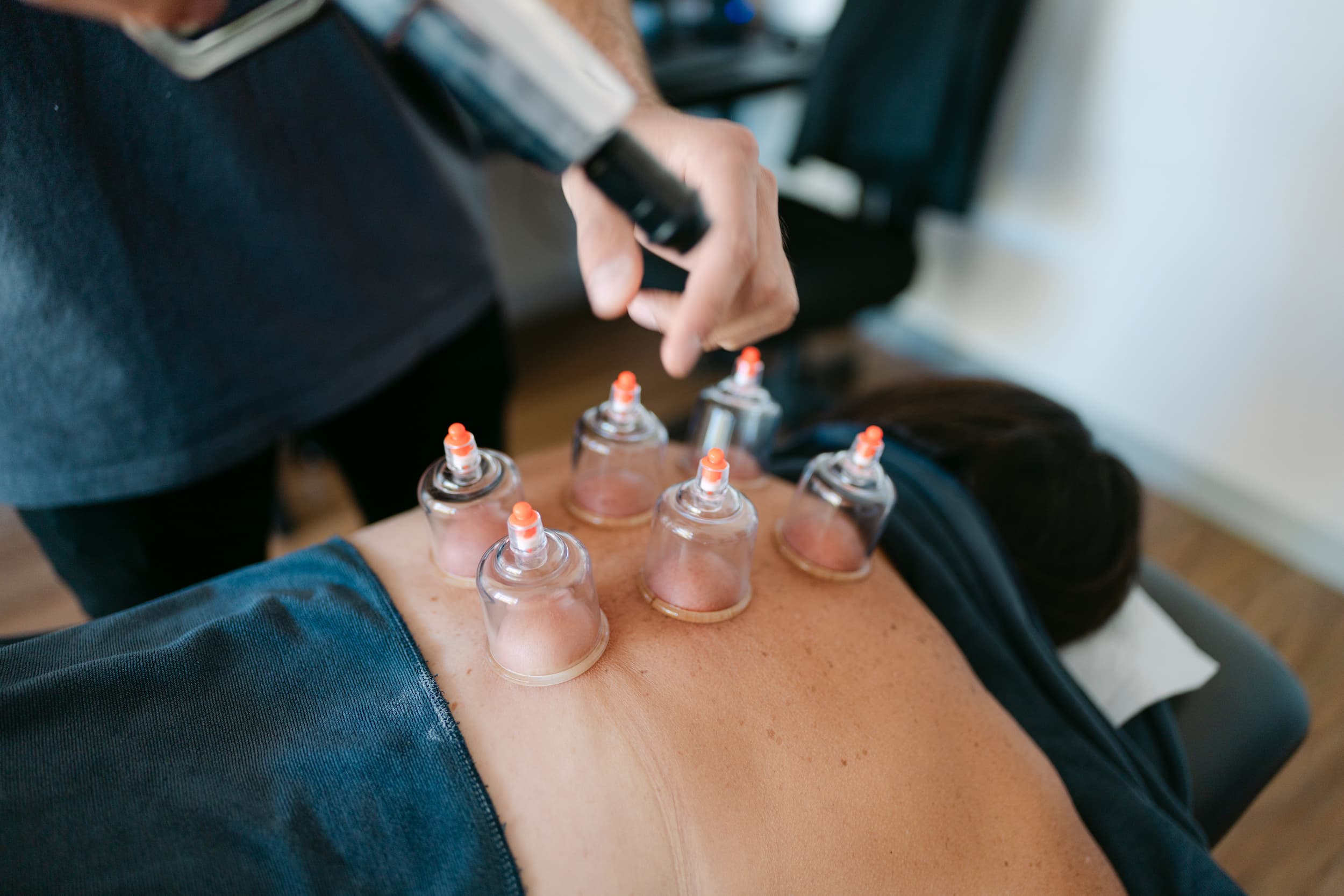
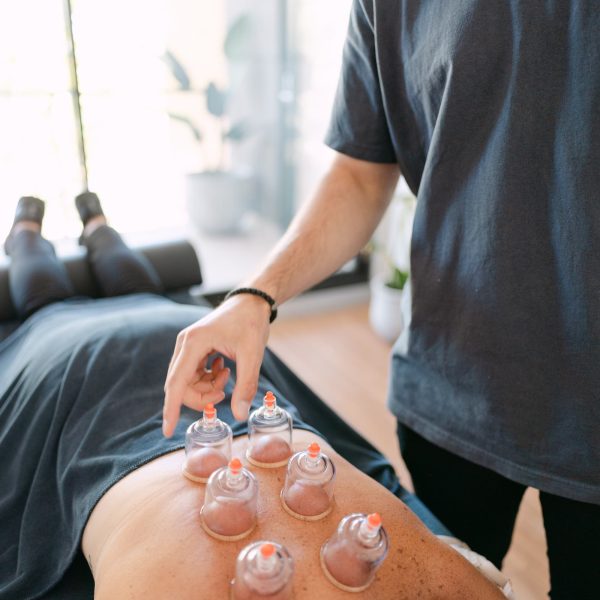
Cupping therapy uses specially designed cups placed on the skin to create gentle suction.
This suction lifts the soft tissue slightly away from the underlying structures.
The goal is to help improve tissue movement, reduce muscle tension, and promote circulation.
Cups may remain still or be moved across the skin depending on the treatment approach.
How it works (simple physiology)
Cupping works through mechanical and nervous system effects.
When suction is applied:
- Superficial tissue layers are lifted and decompressed
- Local blood flow temporarily increases
- Fascial layers may glide more easily
- Muscle tension may reduce
- Sensory input to the nervous system changes
This combination can help reduce protective muscle guarding and improve movement comfort.
Some researchers describe cupping as a form of myofascial decompression, meaning it helps reduce compression or restriction between tissue layers.
Who it helps / conditions treated
Cupping may be helpful for people experiencing:
- Muscle tightness or stiffness
- Back or neck pain
- Shoulder tension
- Sports recovery needs
- Overuse injuries
- Myofascial restriction
- Movement limitation due to soft tissue tension
It is often used where muscles feel restricted or “tight” and movement is limited.
What to expect in treatment
Your osteopath will:
- Assess the area requiring treatment
- Place cups on the skin to create suction
- Leave cups in place or gently move them
- Remove cups after a short treatment period
Treatment usually feels like firm pressure or pulling on the skin.
Most people tolerate it comfortably.
Skin markings
Temporary circular marks may appear where cups were placed.
These are not bruises in the traditional sense.
They are caused by local changes in circulation and typically fade within several days.
Evidence & research
Research into cupping therapy is growing, particularly in musculoskeletal pain and myofascial conditions.
Some studies suggest cupping may:
- reduce pain intensity
- improve range of motion
- reduce muscle tension
- improve short-term function
However, evidence quality varies between conditions, and results are not uniform across all studies.
Key research examples
Cao et al., 2015 — Systematic Review of Cupping Therapy
Found potential benefit for pain conditions, including musculoskeletal pain, but highlighted variability in study quality.
Journal of Traditional and Complementary Medicine.
Kim et al., 2018 — Systematic Review and Meta-analysis
Reported short-term pain reduction in neck and low back pain compared with control groups.
BMJ Open.
Lauche et al., 2012 — Randomised Controlled Trial
Demonstrated reduced chronic neck pain following cupping treatment compared with usual care.
Evidence-Based Complementary and Alternative Medicine.
Clinical interpretation
Cupping appears most useful as:
- A short-term pain and tension reduction tool
- An adjunct to manual therapy and exercise
- Part of an integrated rehabilitation approach
As with most manual therapies, outcomes improve when combined with movement and rehabilitation.
Safety and suitability
Cupping therapy is generally safe when performed by trained clinicians.
Possible temporary effects:
- Skin marking
- Mild soreness
- Skin sensitivity
Cupping may not be suitable for:
- fragile or damaged skin
- bleeding disorders
- certain medications affecting clotting
- some medical conditions affecting circulation
Your osteopath will assess suitability before treatment.
Frequently asked questions
Does cupping hurt?
Most people feel pressure or pulling rather than pain.
How long do the marks last?
Usually a few days to about one week, depending on the individual.
Are the marks bruises?
They are not caused by trauma. They result from temporary changes in circulation.
How many sessions will I need?
This depends on your condition and treatment goals.
Is cupping used alone?
No. It is typically combined with other osteopathic treatments.
Why we use it at Live Well
We use cupping when clinically appropriate because it can:
- Reduce soft tissue restriction
- Improve tissue mobility
- Complement hands-on therapy
- Support movement rehabilitation
It is particularly helpful when muscle and fascial tension limit progress.
Cupping is never used routinely — only when it fits your treatment needs.
Related treatments
- Soft Tissue Therapy
- Myofascial Release
- Dry Needling
- Exercise Rehabilitation
- Joint Mobilisation
- Shockwave Therapy