
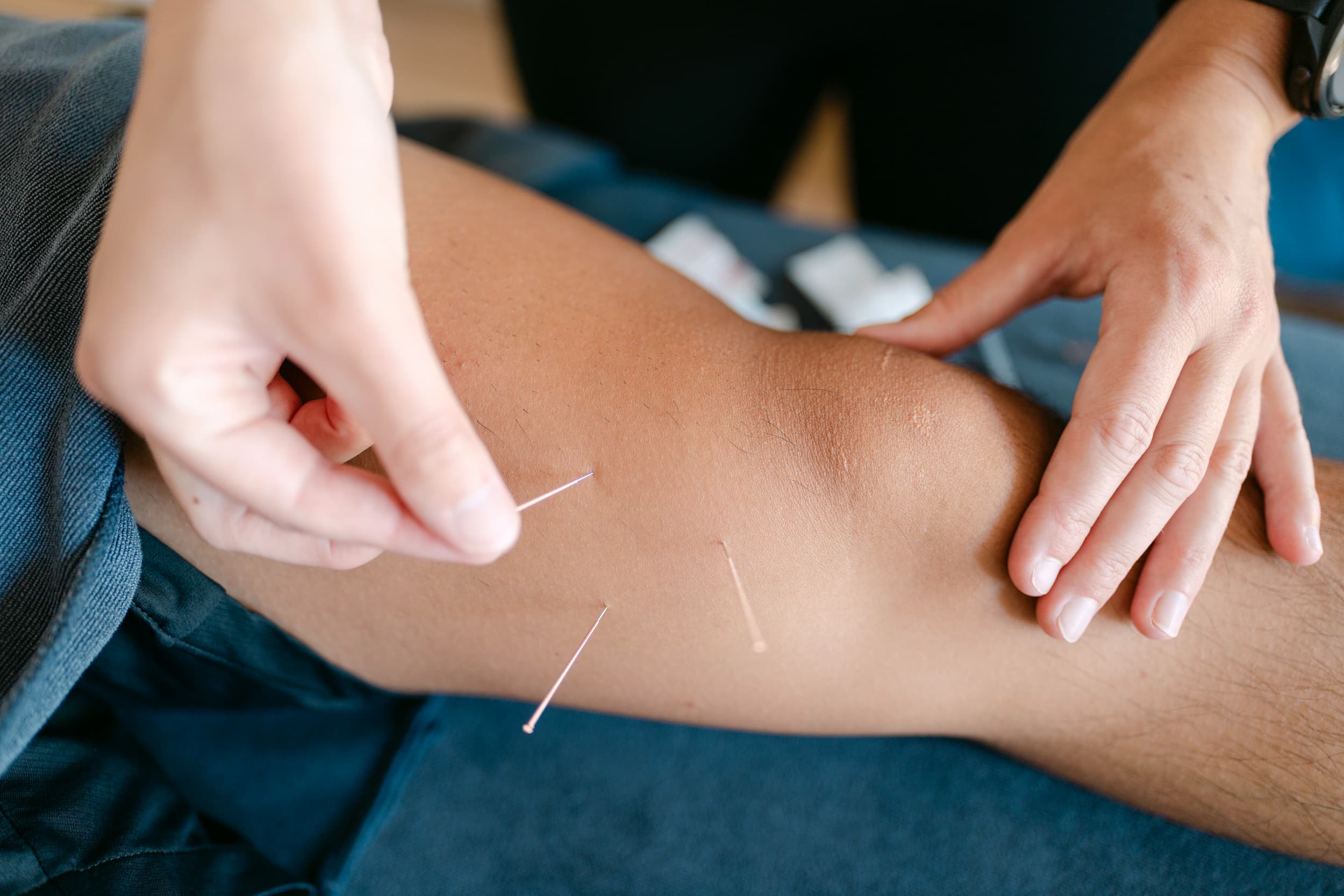
Dry Needling in Osteopathy
Targeted Muscle Treatment for Pain & Movement — Melbourne & Caroline Springs
At Live Well Health Centre, dry needling is one of the techniques our osteopaths may use to help reduce muscle tension, relieve pain, and improve movement.
It is always used as part of a broader osteopathic treatment plan tailored to your condition.
What is dry needling? (plain English)
Dry needling is a treatment where a trained clinician inserts a very fine sterile needle into specific tight areas of muscle known as trigger points.
Trigger points are sensitive, contracted areas within muscle that can cause:
- pain
- stiffness
- reduced movement
- referred pain into other areas
The needle does not inject medication — “dry” simply means nothing is injected.
The goal is to help the muscle relax, improve blood flow, and reduce pain.
Who is dry needling for?
Dry needling is most commonly used for muscle-related pain or movement restriction.
It may assist with:
- Neck and shoulder tightness
- Back muscle tension
- Headaches related to muscle tension
- Sports injuries
- Muscle strains
- Persistent muscle knots
- Overuse injuries
- Limited range of motion
It is particularly helpful when tight or overactive muscles are limiting recovery.
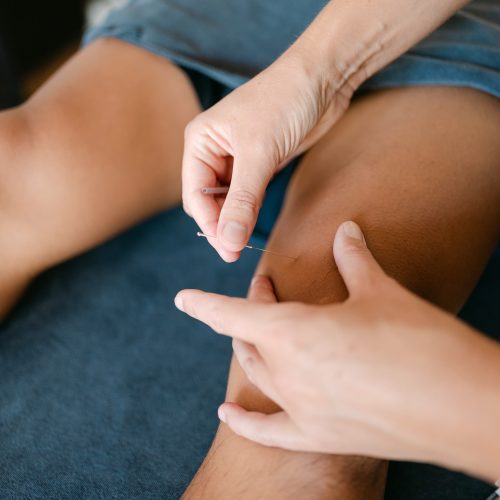
How dry needling works (simple physiology)
Research suggests that inserting a needle into a tight or sensitive muscle can:
- Reduce trigger point activity
- Improve local blood circulation
- Normalise muscle contraction patterns
- Reduce sensitivity of pain receptors
- Influence how the nervous system processes pain
Some people experience a brief muscle twitch response — this is a normal reflex and may indicate release of muscle tension.
Dry needling affects both the muscle tissue and nervous system, helping the body return to more normal movement and function.
What to expect during treatment
Your osteopath will:
- Assess your condition and identify target muscles
- Clean the skin
- Insert a very fine sterile needle into the muscle
- Remove the needle after treatment
You may feel:
- mild pressure
- twitch sensation
- dull ache
Treatment is usually brief and well tolerated.
What happens after treatment?
Common short-term responses include:
- Mild muscle soreness
- Temporary fatigue
- Occasional small bruise
This usually settles within 24–48 hours.
Gentle movement and hydration are recommended.
Evidence and research
Dry needling has been widely studied for myofascial trigger points and musculoskeletal pain.
Research suggests dry needling may:
- reduce pain intensity
- improve pressure pain threshold
- improve range of motion
- decrease muscle sensitivity
Results vary between individuals and conditions.
Dry needling is generally most effective when combined with:
- Rehabilitation exercise
- Movement retraining
- Manual therapy
Key research references
Liu L et al., 2018 — Systematic Review & Meta-analysis
Dry needling for myofascial trigger points in neck and shoulder pain reduced pain and improved function.
Archives of Physical Medicine and Rehabilitation.
Gattie E et al., 2017 — Systematic Review
Dry needling improved pain and disability in upper-quarter musculoskeletal conditions.
Journal of Orthopaedic & Sports Physical Therapy.
Boyles R et al., 2015 — Systematic Review
Supports dry needling for pain reduction in musculoskeletal trigger point conditions.
Journal of Manual & Manipulative Therapy.
Clinical interpretation
Evidence supports dry needling as a useful adjunct treatment — particularly for muscle-related pain — but it is most effective as part of a comprehensive treatment plan.
Pricing and session length
At Live Well Health Centre, dry needling is part of your osteopathic treatment.
- No additional charge during standard consultations
- Included where clinically appropriate
Initial consultation: approximately 45 minutes
Follow-up consultation: approximately 30 minutes
Safety and regulation in Australia
Dry needling is safe when performed by appropriately trained practitioners.
At Live Well:
- All osteopaths are registered with AHPRA
- Single-use sterile needles are used
- Infection control standards are followed
- Treatment is only performed with consent
Serious adverse effects are rare.
Regulation source: Australian Health Practitioner Regulation Agency (AHPRA)
Who performs dry needling?
Dry needling is performed only by qualified registered osteopaths who have completed additional training.
Your practitioner will determine whether it is appropriate for your condition.
When we may not use dry needling
Dry needling may not be suitable if you have:
- needle phobia
- bleeding disorders
- certain medications (blood thinners)
- local infection
- certain medical conditions
- pregnancy (some areas avoided)
If another approach is more appropriate, we will discuss alternatives.
Integration with rehabilitation (our point of difference)
At Live Well, dry needling is not used in isolation.
It is integrated with:
- Manual therapy
- Movement retraining
- Strength and exercise programs
- Clinical Pilates where appropriate
This combined approach supports longer-lasting recovery.
Dry needling vs acupuncture
This is a common question.
Dry needling
- Based on modern anatomy and muscle science
- Targets trigger points and tissue dysfunction
- Used for musculoskeletal conditions
Acupuncture (Traditional Chinese Medicine)
- Based on meridian energy pathways
- Focuses on systemic balance
- Different clinical philosophy
Both use similar needles — but different treatment frameworks.
Frequently asked questions
Does dry needling hurt?
Most people feel only mild discomfort. Treatment intensity is adjusted to your comfort.
How many treatments will I need?
This depends on your condition and response to treatment.
Can I exercise after dry needling?
Light movement is usually recommended. Your osteopath will advise.
Is it covered by private health insurance?
If performed within an osteopathy consultation, it is typically included under osteopathy benefits.
Do I have to have dry needling?
No. It is always optional.
Why we use dry needling at Live Well
We use dry needling because it can:
- Quickly reduce muscle tension
- Iimprove movement
- Enhance manual therapy
- Support rehabilitation
It is used only when clinically appropriate.