Soft Tissue Therapy
Targeted Muscle Treatment for Pain, Movement & Recovery — Melbourne & Caroline Springs
Soft tissue techniques are one of the most commonly used hands-on treatments at Live Well Health Centre.
They help reduce muscle tension, improve movement, and support recovery from injury — all within a full osteopathic assessment and treatment plan.
What is soft tissue technique?
Soft tissue technique is a hands-on treatment used by osteopaths to work with:
- Muscles
- Tendons
- Ligaments
- Fascia (connective tissue)
It involves applying specific pressure, stretching, and movement to improve how these tissues function.
Unlike general massage, osteopathic soft tissue work is targeted and clinically directed, based on assessment findings and diagnosis.
Why osteopaths use soft tissue techniques
At Live Well, soft tissue treatment is often used to:
- Reduce muscle tension or spasm
- Improve movement and flexibility
- Decrease pain sensitivity
- Support injury recovery
- Prepare joints for mobilisation or exercise
- Restore normal movement patterns
It is usually part of a broader treatment plan that may include joint work, rehabilitation exercises, and movement retraining.
Who is soft tissue treatment for?
Soft tissue techniques can benefit many people, including:
- Those with muscle-related pain or stiffness
- Active individuals or athletes
- People recovering from injury
- Those experiencing tension from stress
- People with postural strain or overuse injuries
It is commonly used for back pain, neck pain, shoulder tension, sports injuries, and movement restrictions.
How does soft tissue treatment work?
Soft tissue therapy works through both mechanical effects and nervous system responses.
When pressure or movement is applied:
- Muscle fibres are gently lengthened
- Tissue layers glide more easily
- Local blood flow increases temporarily
- Muscle guarding can reduce
- Pain sensitivity may decrease
Massage also influences how the nervous system interprets safety and threat in the body.
When muscles feel “safe,” they often relax — which can improve movement and reduce discomfort.
Soft tissue technique vs remedial massage
This is one of the most common patient questions.
Both involve hands-on muscle work — but the purpose and context are different.
Osteopathic soft tissue treatment
- Part of a full clinical assessment and diagnosis
- Used to treat specific dysfunction or injury
- Integrated with joint treatment and rehabilitation
- Adjusted moment-to-moment based on tissue response
- Focused on restoring movement and function
Remedial massage
- Typically focused on relaxation or general muscle tension
- Usually delivered as a stand-alone therapy
- May not involve full musculoskeletal assessment
- Often uses standardised treatment approaches
In simple terms:
Remedial massage focuses on the muscle.
Osteopathic soft tissue treatment focuses on how the muscle affects the whole body.
What to expect during treatment
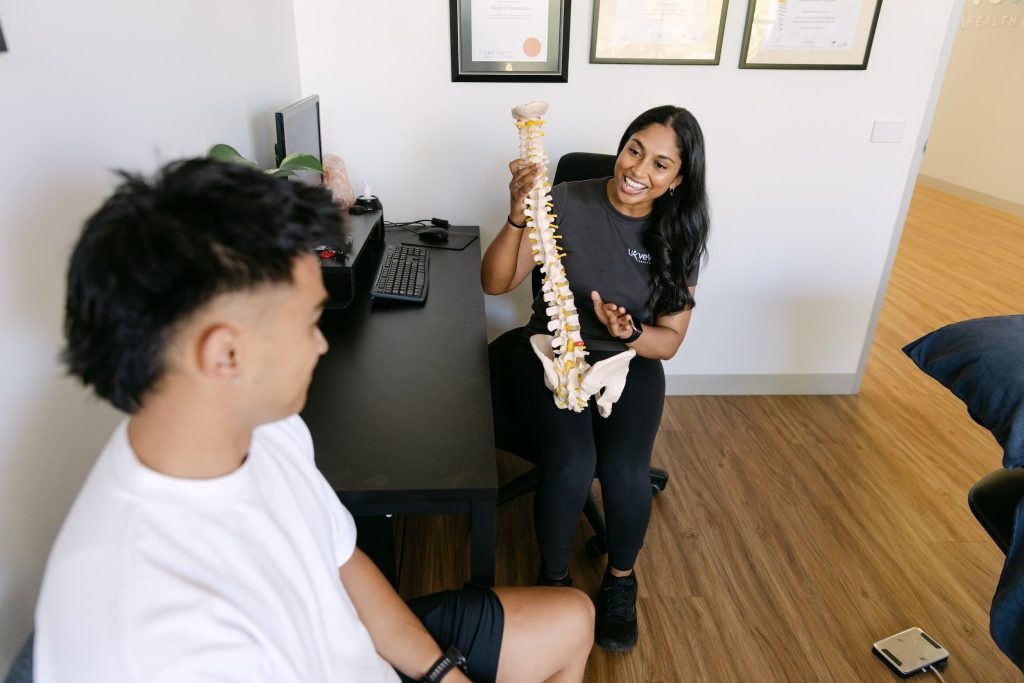
At your first visit to Live Well Health Centre, your osteopath will:
- Take a detailed case history
- Review your general health
- Perform a physical assessment
- Identify areas of dysfunction
- Provide hands-on treatment
- Give advice and exercises to support recovery
Soft tissue techniques may be combined with:
- Joint mobilisation
- Manipulation
- Dry needling
- Movement rehabilitation
- Exercise prescription
Appointment duration
Initial consultation: approximately 45 minutes
Follow-up consultation: approximately 30 minutes
Wear loose, comfortable clothing where possible.
Evidence and research
Research on massage and soft tissue therapy suggests several short-term benefits.
Studies indicate soft tissue treatment may:
- Reduce pain in musculoskeletal conditions
- Improve range of motion temporarily
- Reduce delayed onset muscle soreness (DOMS)
- Influence nervous system pain processing
- Increase local blood flow and temperature
Evidence also suggests the best outcomes occur when soft tissue treatment is combined with:
- Movement
- Strengthening
- Rehabilitation exercise
- Patient education
Sources:
American College of Physicians clinical guidelines for non-pharmacological treatment of musculoskeletal pain
Systematic reviews on massage therapy for musculoskeletal conditions (e.g., Bervoets et al., 2015; Crawford et al., Cochrane Reviews)
What benefits do patients commonly notice?
Many people report:
- Reduced muscle tension
- Easier movement
- Short-term pain relief
- Improved flexibility
- Feeling less “tight” or restricted
- Faster recovery after exercise
Individual response varies depending on condition and treatment plan.
Why we use soft tissue techniques frequently at Live Well
We use soft tissue treatment regularly because:
- Muscle tension often contributes to joint dysfunction
- Reducing guarding improves movement
- Tissue preparation enhances other treatments
- Patients tolerate it well
- It supports rehabilitation progress
It is one of the most effective ways to help the body move more freely.
Frequently asked questions
Does soft tissue treatment hurt?
Pressure can feel intense in tight areas, but treatment is adjusted to your comfort level.
Will I feel sore afterwards?
Some people feel mild soreness for 24–48 hours, similar to post-exercise muscle soreness.
Is it the same as a massage appointment?
No. It is part of a full osteopathic treatment plan based on clinical findings.
How many treatments will I need?
This depends on your condition, goals, and response to treatment. Your osteopath will guide you.
Soft tissue therapy as part of whole-body care
At Live Well, soft tissue treatment is rarely used in isolation.
It is combined with movement, strengthening, and education to help you recover — and stay well.