
What is Osteopathy?
Evidence-Based Manual Therapy for Musculoskeletal Health — Melbourne & Caroline Springs
Osteopathy is a form of hands-on healthcare that focuses on how the body moves, functions, and heals.
At Live Well Health Centre, osteopathy is primarily used to assess and treat musculoskeletal conditions — problems involving muscles, joints, ligaments, and movement patterns — with the goal of reducing pain, improving function, and supporting long-term health.
Osteopaths aim to remove any barriers that may be impeding our body's own internal healing mechanism to recover and function as a whole.
The origins of osteopathy
Osteopathy was founded in the late 1800s by Dr Andrew Taylor Still, an American physician who believed that the body has a natural ability to heal when structure and function are in balance.
His core principles still influence modern osteopathic practice:
- The body is interconnected and works as a unit
- Structure and function are closely related
- The body has self-regulating and self-healing mechanisms
- Treatment should support overall health, not just symptoms
Today, osteopathy has evolved into a regulated allied health profession grounded in anatomy, biomechanics, and clinical science.
What osteopaths do (plain English)
Osteopaths are allied health professionals trained to assess, diagnose, and treat movement-related problems.
We take time to understand how your body functions as a whole — not just the painful area — and use hands-on treatment combined with exercise and lifestyle advice to support recovery.
Treatment may include:
- Soft tissue massage
- Joint mobilisation
- Joint manipulation
- Myofascial techniques
- Dry needling
- Movement rehabilitation and exercise programs
We also provide education and self-management strategies to help prevent recurrence.
Who is osteopathy for?
Osteopathy may help people experiencing a wide range of musculoskeletal conditions, including:
- Neck pain and headaches
- Back pain (acute or chronic)
- Sciatic pain
- Shoulder injuries
- Sporting injuries
- Hip or pelvic pain
- Knee pain
- Foot and heel pain
- Tendon injuries (e.g. tennis elbow, golfer’s elbow)
- Pregnancy-related musculoskeletal pain
- Postural strain
- Jaw pain (TMJ dysfunction)
If you are unsure whether osteopathy is suitable, our team can guide you.
What happens in an osteopathy appointment?
Your consultation typically includes:
- Detailed health history and physical assessment
- Movement and posture analysis
- Hands-on treatment
- Personalised exercise or rehabilitation plan
- Advice to support recovery and prevent recurrence
Treatment is tailored to your condition, goals, and comfort level.
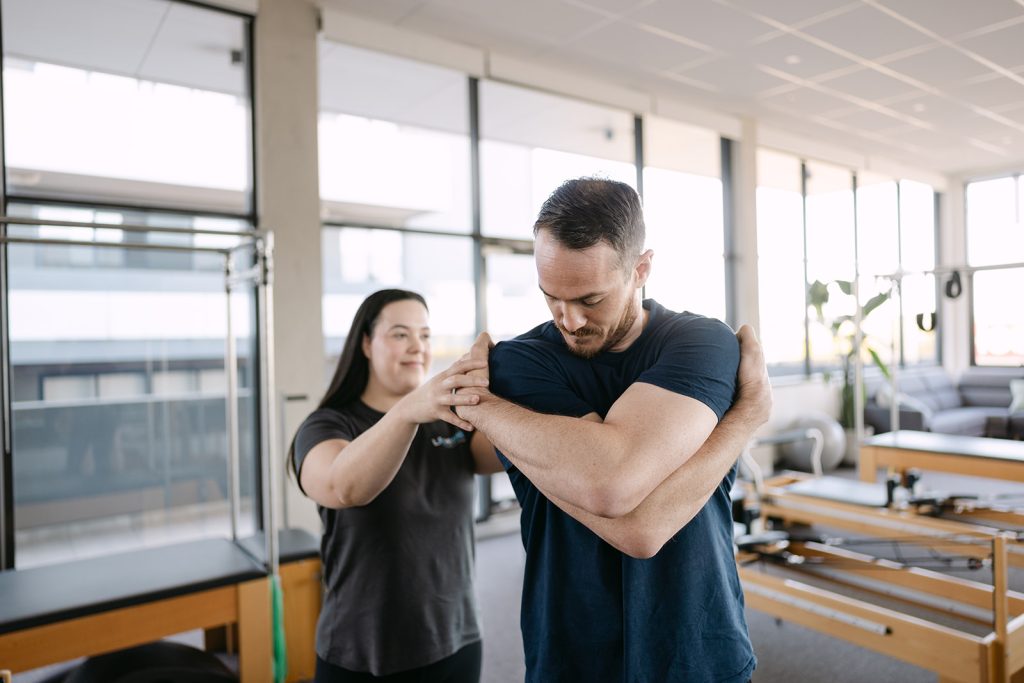
Osteopathy and movement-based health
At Live Well, we believe treatment should extend beyond symptom relief.
Movement is central to long-term health and recovery. This aligns closely with the philosophy of Joseph Pilates, whose clinical exercise approach emphasises strength, control, alignment, and functional movement.
For many patients, combining manual therapy with structured rehabilitation — such as clinical Pilates — supports more sustainable outcomes.
Education and professional regulation in Australia
Osteopathy is a regulated health profession in Australia.
All practising osteopaths must:
- Be registered with the Osteopathy Board of Australia under the Australian Health Practitioner Regulation Agency (AHPRA)
- Complete an approved university degree (typically 4.5–5 years full time)
- Meet national registration standards
- Complete ongoing Continuing Professional Development (CPD)
- Maintain professional indemnity insurance
These requirements ensure safe, competent, and evidence-informed care.
Sources:
Australian Health Practitioner Regulation Agency (AHPRA)
Osteopathy Board of Australia Registration Standards
Evidence and research supporting osteopathy
Research into osteopathy often focuses on osteopathic manipulative treatment (OMT) and manual therapy for musculoskeletal pain.
Findings vary by condition, but overall evidence suggests osteopathic treatment may help some people with musculoskeletal pain — particularly low back pain.
What research suggests
- Some systematic reviews report moderate-quality evidence that OMT can reduce pain and improve function in chronic non-specific low back pain.
- Research also suggests benefit in pregnancy-related back pain and some neck pain conditions.
- Results are not always consistent across studies, and treatment effects vary between individuals.
What this means for patients
Osteopathy is considered a safe, conservative treatment option commonly used for musculoskeletal conditions.
Like many healthcare approaches, outcomes depend on the condition, treatment plan, and individual response.
Key research references
Franke H et al. Osteopathic manipulative treatment for non-specific low back pain. BMC Musculoskeletal Disorders, 2014.
Franke H et al. Osteopathic manipulative treatment for chronic low back pain. Systematic Review and Meta-analysis, 2015.
Cochrane Reviews — manual therapy for musculoskeletal pain conditions.
Is osteopathy safe?
Osteopathy is generally considered safe when provided by a registered practitioner.
Treatment is adapted to the individual and may be modified based on:
- Medical history
- Injury type
- Comfort level
- Clinical presentation
Your osteopath will explain recommended treatment and obtain informed consent.
Frequently asked questions
Do I need a referral to see an osteopath?
No. You can book directly.
Some funding types (WorkCover, TAC, CDM plans) may require referral documentation.
How long are appointments?
Initial consultations are typically longer to allow full assessment.
Follow-up appointments focus on treatment and progression.
What are the fees?
Consultation fees vary depending on practitioner level and appointment type.
Please see our Fees page for full details.
Why choose Live Well Health Centre?
We combine:
- Evidence-informed manual therapy
- Movement-based rehabilitation
- Individualised treatment plans
- Experienced registered osteopaths
- Strong focus on long-term outcomes
Our goal is not just symptom relief — but helping you move, function, and feel better long term.