
Plantar Fasciitis (Plantar Heel Pain)
Osteopathic Management for Plantar Fasciitis — Melbourne & Caroline Springs
Plantar fasciitis is one of the most common causes of heel pain and can significantly affect walking, standing, and daily activity.
At Live Well Health Centre, osteopaths help assess and manage plantar fasciitis by identifying factors that may be placing stress on the foot and supporting recovery through movement, load management, and rehabilitation.
Our approach focuses on improving function, supporting tissue health, and helping you return to comfortable activity.
What is plantar fasciitis?
Plantar fasciitis refers to pain arising from irritation or overload of the plantar fascia, a strong band of connective tissue that supports the arch of the foot.
The plantar fascia helps absorb force when walking or running. When load exceeds the tissue’s capacity, irritation or degeneration may occur, leading to heel pain.
Many healthcare professionals now use the term plantar heel pain or plantar fasciopathy, as the condition often involves tissue overload rather than inflammation alone.
Common symptoms
Plantar fasciitis commonly causes:
- pain under the heel or along the arch
- sharp pain with the first steps in the morning
- pain after rest or prolonged sitting
- discomfort with prolonged standing or walking
- tenderness when pressing the heel
Symptoms may ease with movement but return after activity.

What causes plantar fasciitis?
Plantar fasciitis usually develops due to repeated loading or strain on the plantar fascia.
Common contributing factors include:
- sudden increase in walking, running, or activity
- prolonged standing
- reduced foot or ankle mobility
- calf muscle tightness
- footwear that does not adequately support load
- changes in training or exercise volume
- reduced tissue capacity or conditioning
The condition is often influenced by how the foot and lower limb move and absorb load.
Who is most likely to experience plantar fasciitis?
Plantar fasciitis can affect anyone but is more common in:
- runners and active individuals
- people who stand for long periods
- individuals with recent increases in activity
- people with reduced ankle mobility
- those with previous foot or lower limb injury
- middle-aged adults
How is plantar fasciitis assessed?
Osteopathic assessment typically includes:
- detailed history of symptoms and activity levels
- foot and ankle movement assessment
- lower limb biomechanics evaluation
- muscle flexibility testing
- walking and load assessment
Imaging is not usually required but may be recommended if symptoms are persistent or unclear.
Referral to a GP or specialist may be advised where appropriate.
How osteopathy may help manage plantar fasciitis
Osteopaths help manage plantar fasciitis by addressing mechanical and functional factors influencing tissue load.
Management may involve:
- improving foot and ankle mobility
- addressing calf muscle tension
- supporting load tolerance
- guiding activity modification
- providing rehabilitation and strengthening strategies
Care is individualised and focuses on improving tissue capacity and movement efficiency.
Osteopathic management often considers the entire lower limb — including the ankle, knee, hip, and walking mechanics.
Techniques that may be used
Based on assessment findings, management may include:
- soft tissue techniques
- joint mobilisation of foot and ankle
- muscle energy technique (MET)
- calf and foot strengthening exercises
- load management guidance
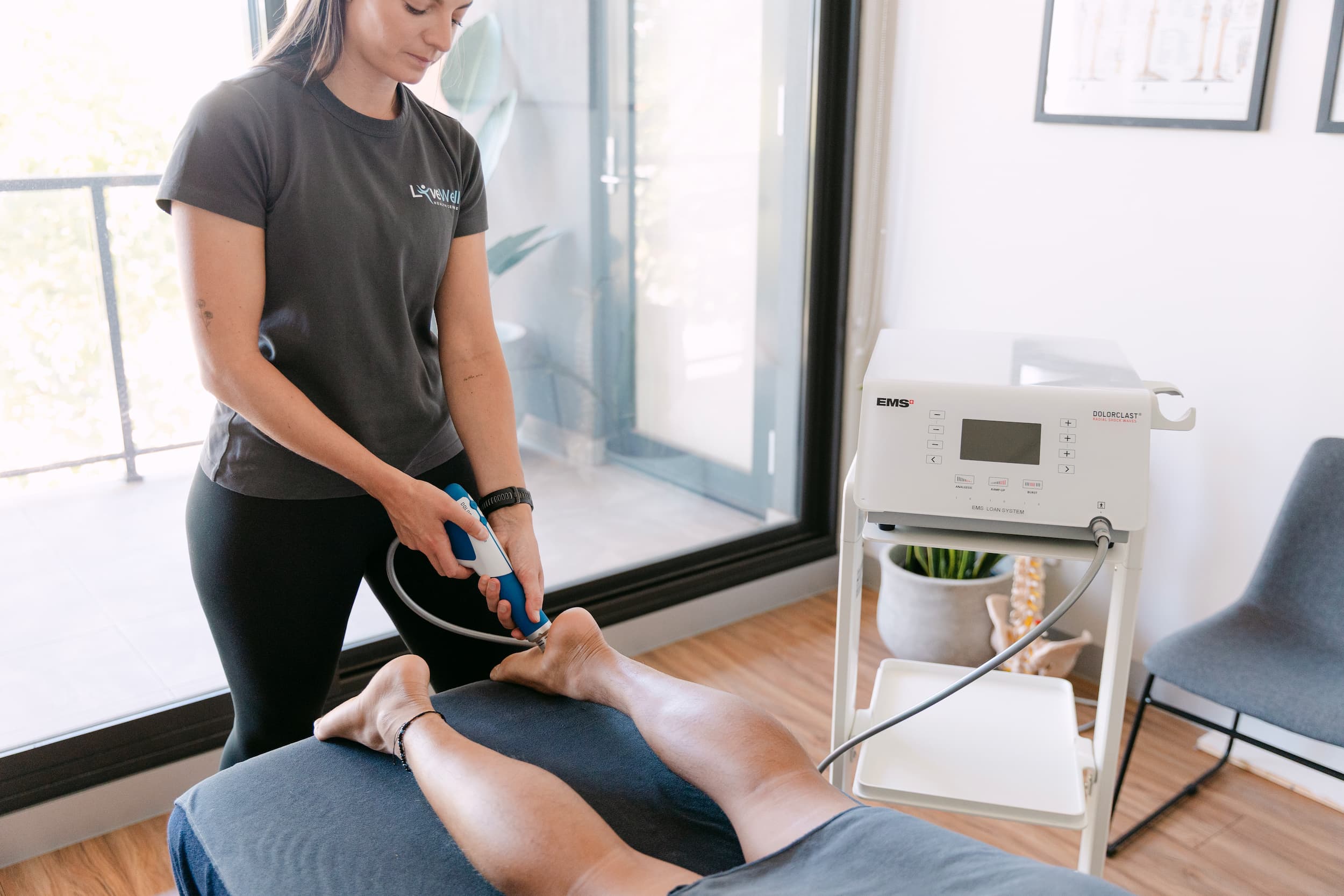
- shockwave therapy (in selected chronic cases)
- movement retraining
Technique selection depends on individual presentation and clinical reasoning.
Evidence and research
Clinical guidelines support conservative care as the first-line approach for plantar fasciitis.
Evidence supports:
- progressive loading and exercise therapy
- manual therapy as part of multimodal care
- activity modification and footwear considerations
- extracorporeal shockwave therapy for persistent cases
These approaches are widely recommended in musculoskeletal practice.
Key guideline and research sources
Journal of Orthopaedic & Sports Physical Therapy (JOSPT) — Heel Pain Clinical Practice Guideline
Recommends manual therapy and stretching/strengthening for plantar heel pain.
Cochrane Reviews — Shockwave Therapy for Plantar Heel Pain
Suggests shockwave therapy may help in persistent cases.
Systematic reviews of plantar fasciopathy management
Support progressive loading and rehabilitation-based care.
Clinical interpretation
Management focusing on load tolerance, tissue conditioning, and movement is widely recommended for plantar heel pain.
What to expect from management
Recovery varies depending on:
- duration of symptoms
- activity demands
- tissue load tolerance
- adherence to rehabilitation
Many cases improve gradually with appropriate load management and exercise.
Active participation in rehabilitation is often an important part of recovery.
Self-management and lifestyle support
Education and activity modification are key components of management.
Your osteopath may guide:
- load management strategies
- stretching and strengthening programs
- footwear considerations
- gradual return to activity
- movement and walking mechanics
Consistency with rehabilitation is important.
When to seek medical review
Medical assessment is recommended if heel pain involves:
- severe swelling or redness
- trauma or fracture suspicion
- persistent pain despite conservative care
- neurological symptoms
If unsure, seek professional advice.
Frequently asked questions
Should I stop walking if I have plantar fasciitis?
Complete rest is rarely recommended. Activity modification is usually advised.
Do I need orthotics?
Some people benefit from additional support, depending on individual assessment.
How long does plantar fasciitis last?
Recovery time varies depending on tissue load and rehabilitation.
Is plantar fasciitis inflammatory?
It often involves tissue overload and degeneration rather than active inflammation.
Related conditions
- Foot pain
- Achilles tendinopathy
- Calf tightness
- Running injuries
Not sure if your heel pain is plantar fasciitis?
If you are unsure what is causing your symptoms, an osteopathic assessment can help identify contributing factors and guide appropriate management.
Book an appointment to discuss your symptoms.