
Joint Articulation & Mobilisation
Gentle Movement Techniques to Restore Joint Function — Melbourne & Caroline Springs
Joint articulation and mobilisation are controlled hands-on techniques osteopaths use to improve joint movement, reduce stiffness, and support recovery.
At Live Well Health Centre, these techniques are commonly used when joints are restricted, stiff, or not moving as smoothly as they should.
They are gentle, rhythmical, and highly adaptable — making them suitable for many people, including those who prefer a low-force treatment approach.
What is it? (plain English)
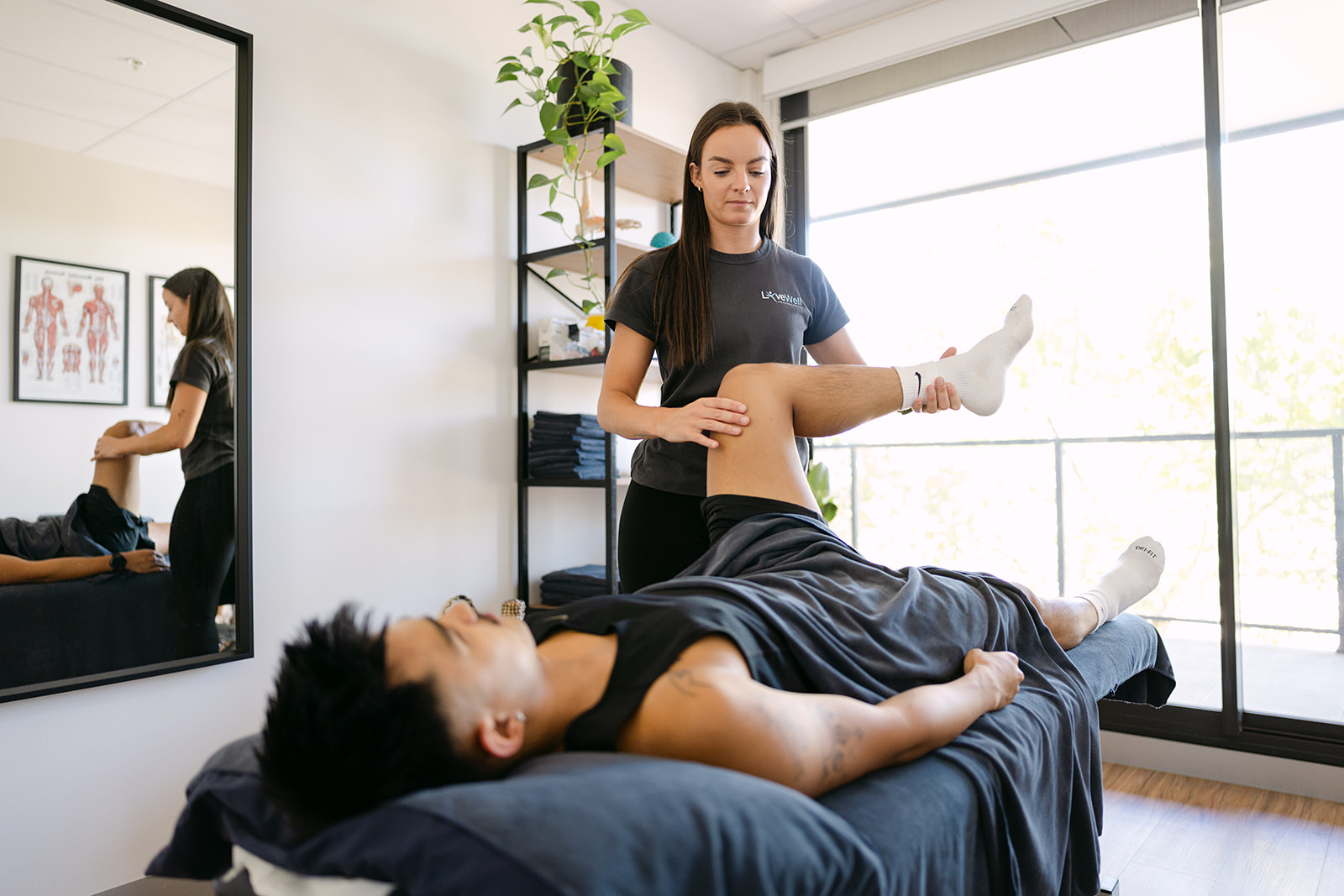
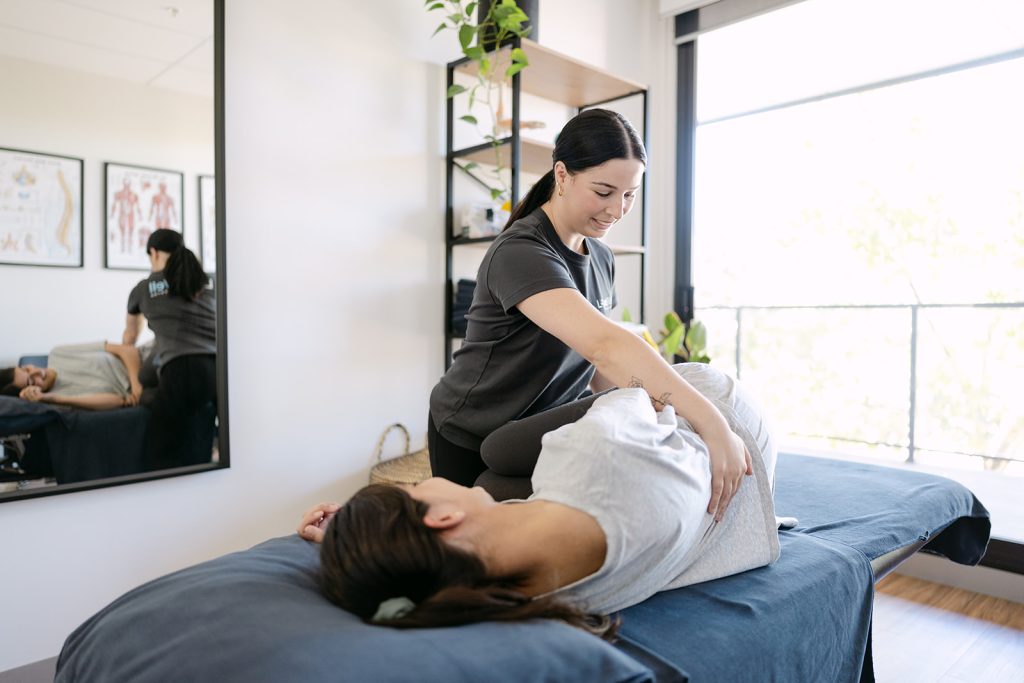
Joint mobilisation and articulation involve the osteopath gently moving a joint through its natural range of motion.
These movements are slow, controlled, and repetitive.
The aim is to:
- Restore normal joint movement
- Reduce stiffness
- Reduce discomfort
- Improve surrounding muscle function
Unlike manipulation (HVLA), mobilisation does not involve a quick thrust or “click”.
Instead, it uses smooth, repeated movements to gradually improve mobility.
How it works (simple physiology)
Joints rely on movement to stay healthy.
When joints become restricted due to injury, posture, or inactivity, surrounding tissues may stiffen and movement can become uncomfortable.
Mobilisation helps by:
- Improving joint glide and mechanics
- Increasing circulation within the joint
- Reducing muscle guarding around the joint
- Stimulating joint sensory receptors
- Improving nervous system awareness of movement
These effects help restore smoother, more comfortable movement.
Who it helps / conditions treated
Joint mobilisation may help people with:
- Joint stiffness or restriction
- Back or neck pain
- Reduced spinal mobility
- Shoulder stiffness
- Rib restriction
- Hip or pelvic movement restriction
- Post-injury joint stiffness
- Age-related joint stiffness
It is especially useful when:
- Movement is limited
- Stiffness causes discomfort
- Joints feel “locked” or restricted
- Gentle treatment is preferred
What to expect in treatment
Your osteopath will:
- Assess joint movement
- Identify areas of restriction
- Apply gentle, repetitive movements
- Gradually increase range as tolerated
Treatment usually feels like smooth, guided movement.
Many people experience improved mobility or reduced stiffness after treatment.
Evidence & research
Joint mobilisation is a widely used manual therapy approach in musculoskeletal care.
Research suggests mobilisation may:
- Reduce pain in spinal and peripheral joints
- Improve joint range of motion
- Improve short-term functional outcomes
- Support rehabilitation progress
Mobilisation is commonly recommended as part of a comprehensive treatment approach including exercise and education.
Key research and guideline references
Bialosky et al., 2009 — Manual Therapy Mechanisms Review
Describes neurophysiological and mechanical effects of mobilisation on pain and movement.
Manual Therapy.
National Institute for Health and Care Excellence (NICE) — Low Back Pain Guideline
Recommends manual therapy, including mobilisation, as part of a treatment package with exercise.
American Physical Therapy Association Clinical Guidelines
Support joint mobilisation for various musculoskeletal conditions affecting movement and pain.
Clinical interpretation
Joint mobilisation is best used as:
- A movement restoration technique
- Preparation for rehabilitation exercise
- A gentle alternative to manipulation
- Part of a combined treatment plan
Safety and suitability
Joint mobilisation is considered very safe when performed by trained practitioners.
It is particularly suitable for people who:
- Prefer gentle treatment
- Cannot tolerate manipulation
- Have sensitive joints
- Are in early stages of recovery
Your osteopath will assess suitability based on your condition and medical history.
Frequently asked questions
Is mobilisation the same as manipulation?
No. Mobilisation uses slow, repeated movements. Manipulation is a quick thrust.
Does mobilisation hurt?
It should feel gentle and controlled. Discomfort is minimal.
How quickly will I notice results?
Many people notice improved movement immediately or within a few sessions.
Is it safe for older adults?
Yes. It is commonly used because it is gentle and adaptable.
Will mobilisation fix the problem permanently?
It improves movement, but long-term results depend on rehabilitation and activity.
Why we use joint mobilisation at Live Well
We use joint mobilisation because it:
- Restores natural joint motion
- Reduces stiffness safely
- Improves comfort during movement
- Prepares the body for rehabilitation
- Suits a wide range of patients
It is one of the most versatile and adaptable osteopathic techniques.
Integration with rehabilitation (our point of difference)
At Live Well, mobilisation is combined with:
- Exercise rehabilitation
- Clinical Pilates
- Soft tissue therapy
- Movement retraining
- Strengthening programs
This ensures improved joint mobility translates into lasting functional improvement.
Related treatments
- HVLA Manipulation
- Muscle Energy Technique
- Soft Tissue Therapy
- Exercise Rehabilitation
- Clinical Pilates