
Trigger Point Therapy
Targeted Treatment for Muscle Knots & Referred Pain — Melbourne & Caroline Springs
Trigger point therapy is a focused soft tissue treatment used by osteopaths to reduce muscle tension, relieve pain, and improve movement.
At Live Well Health Centre, trigger point therapy is commonly used when tight, sensitive areas within muscles are contributing to pain or restricting movement.
It is often combined with other osteopathic treatments to support recovery and long-term function.
What is it? (plain English)
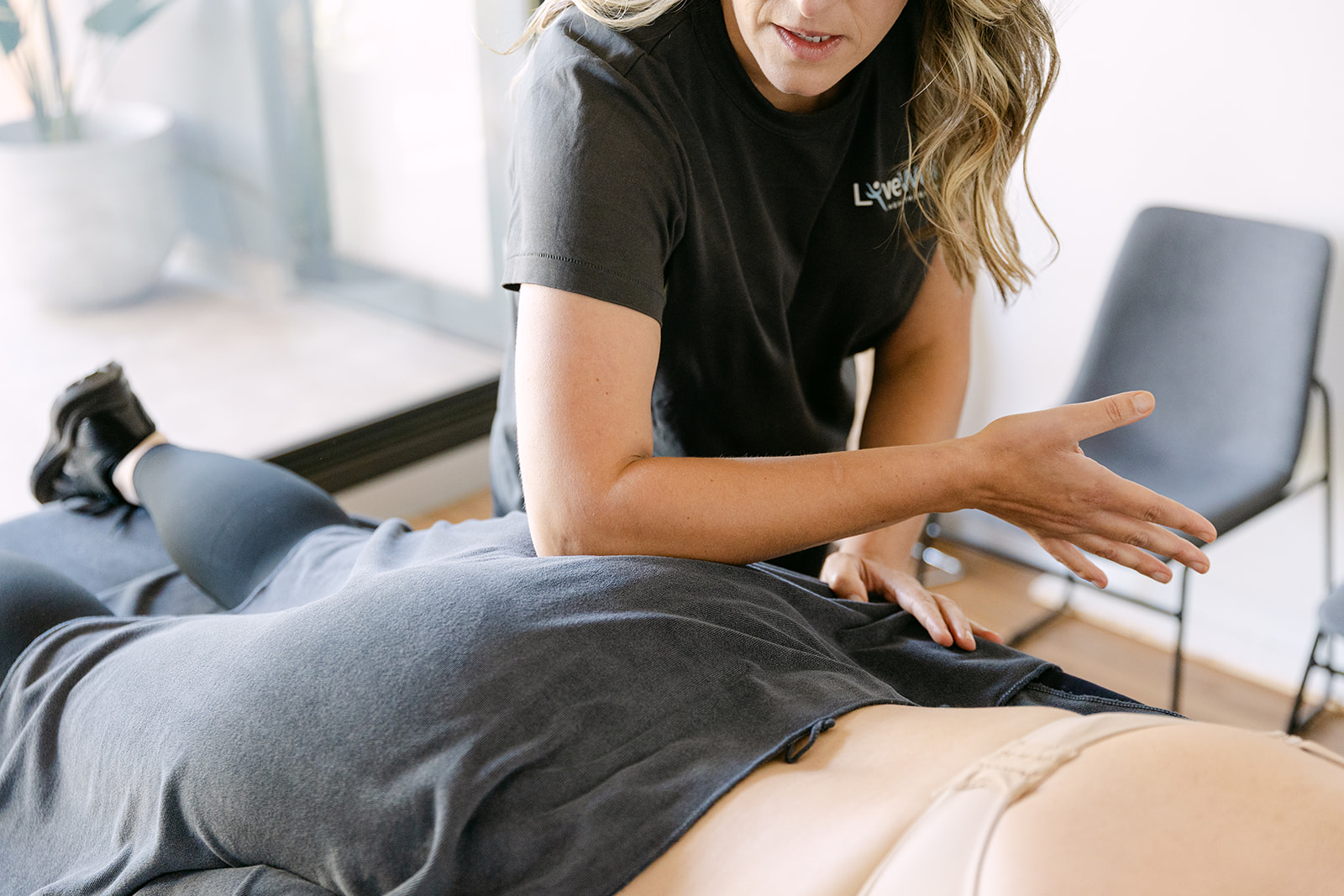
Trigger point therapy is a hands-on treatment that targets tight, sensitive spots within muscles known as trigger points.
Trigger points are sometimes described as “muscle knots.”
They can cause:
- local tenderness
- tightness
- reduced movement
- pain that spreads to other areas (referred pain)
Your osteopath applies sustained pressure or specific manual techniques to help the muscle relax and function more normally.
How it works (simple physiology)
Trigger points are areas of increased muscle tension and sensitivity that can disrupt normal muscle function.
They may develop due to:
- overuse
- injury
- prolonged posture
- stress
- altered movement patterns
Applying controlled pressure to a trigger point may:
- Reduce local muscle contraction
- Improve blood flow
- Reduce pain sensitivity
- Influence nervous system signalling
- Restore normal muscle activation
Releasing trigger points can improve both comfort and movement efficiency.
Who it helps / conditions treated
Trigger point therapy may help people experiencing:
- muscle tightness or stiffness
- neck and shoulder tension
- tension-type headaches
- back pain
- sports injuries
- postural strain
- referred muscle pain
- limited movement due to muscle restriction
It is particularly helpful when pain is linked to specific tight muscle areas.
What to expect in treatment
Your osteopath will:
- Identify sensitive or tight areas within muscle
- Apply sustained pressure or release techniques
- Monitor your response
- Repeat treatment as needed
You may feel:
- firm pressure
- tenderness
- temporary discomfort
Pressure is adjusted to remain tolerable.
Many patients notice reduced tension or improved movement afterwards.
Evidence & research
Trigger point therapy is widely used in musculoskeletal care, particularly for myofascial pain syndromes.
Research suggests trigger point treatment may:
- Reduce local and referred pain
- Improve pressure pain threshold
- Improve range of motion
- Improve short-term function
Evidence varies depending on technique and condition, but overall supports trigger point treatment as a useful adjunct therapy.
Key research examples
Moraska et al., 2013 — Systematic Review
Trigger point massage showed reductions in pain and sensitivity in myofascial pain conditions.
Journal of Bodywork and Movement Therapies.
Ajimsha et al., 2015 — Randomised Clinical Trial
Myofascial trigger point treatment improved pain and function in chronic neck pain.
Journal of Manipulative and Physiological Therapeutics.
Lucas et al., 2009 — Systematic Review
Clinical interpretation
Trigger point therapy is most effective when:
- Part of a comprehensive treatment plan
- Combined with movement rehabilitation
- Underlying movement patterns are addressed
Safety and suitability
Trigger point therapy is generally safe and well tolerated.
Possible temporary effects:
- Local soreness
- Tenderness
- Mild fatigue in treated muscle
This typically settles within 24–48 hours.
Treatment intensity is always adjusted to comfort.
Frequently asked questions
Does trigger point therapy hurt?
Pressure can feel intense in tight areas, but it should remain tolerable.
Will I feel sore afterwards?
Some temporary soreness is common and usually short-lived.
Is it the same as massage?
It is more targeted and clinically directed than general massage.
How many treatments will I need?
This depends on the severity and cause of muscle tension.
Can trigger points come back?
Yes — if underlying movement patterns or load factors are not addressed.
Rehabilitation helps prevent recurrence.
Why we use trigger point therapy at Live Well
We use trigger point therapy because it can:
- Directly target painful muscle areas
- Reduce tension quickly
- Improve movement
It is a precise treatment for muscle-related pain.
Integration with rehabilitation (our point of difference)
At Live Well, trigger point therapy is combined with:
- Exercise rehabilitation
- Clinical Pilates
- Movement retraining
- Soft tissue therapy
- Dry needling when appropriate
This ensures muscle release translates into lasting functional improvement.
Related treatments
- Soft Tissue Therapy
- Dry Needling
- Myofascial Release
- Exercise Rehabilitation
- Clinical Pilates