Muscle Energy Technique (MET)
Gentle Active Treatment to Improve Movement & Reduce Muscle Tightness — Melbourne & Caroline Springs
Muscle Energy Technique (MET) is a gentle hands-on treatment osteopaths use to improve joint movement, reduce muscle tightness, and restore normal function.
At Live Well Health Centre, MET is commonly used when muscles are shortened, overactive, or limiting movement. It is especially useful when patients prefer a controlled, low-force approach to treatment.
What is it? (plain English)
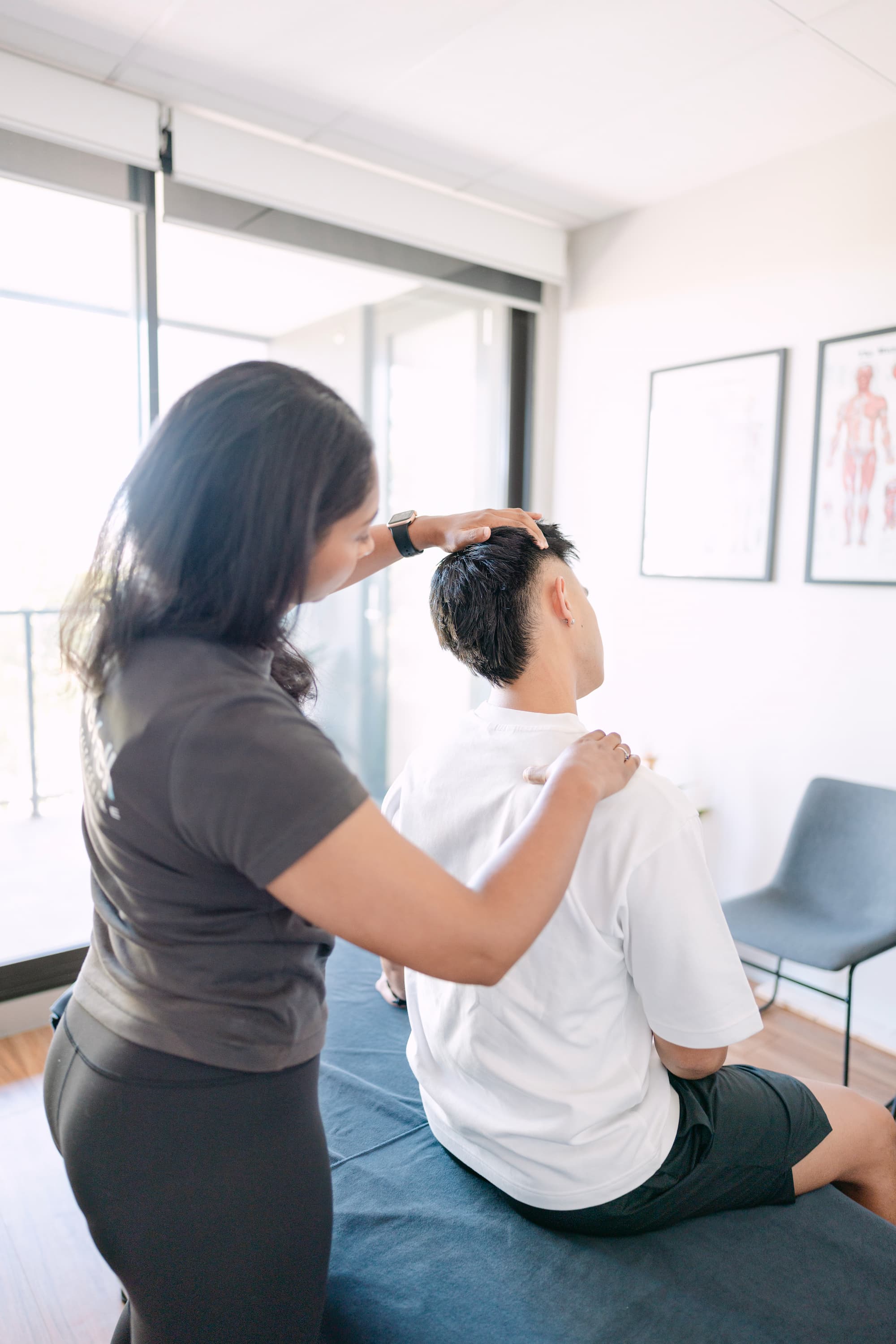
Muscle Energy Technique is a treatment where you gently contract a muscle while your osteopath applies resistance.
After the contraction, the muscle is able to relax and lengthen more easily.
This helps improve movement and reduce tension.
MET is an active treatment, meaning you participate by performing small, controlled muscle contractions guided by your practitioner.
It is a precise and comfortable technique that does not involve forceful movements.
How it works (simple physiology)
Muscles and joints are controlled by the nervous system. When a muscle contracts and then relaxes in a specific way, its resting tension can change.
MET works through neuromuscular reflexes that help muscles relax after contraction.
This may help:
- Reduce muscle tightness
- Improve muscle length
- Restore joint movement
- Reduce muscle guarding
- Improve coordination between muscle groups
This process is sometimes called post-isometric relaxation, where a muscle becomes easier to stretch after it contracts.
Who it helps / conditions treated
MET is commonly used when muscle tightness is contributing to pain or movement restriction.
It may help people with:
- Neck or back stiffness
- Reduced joint mobility
- Muscle tightness or imbalance
- Postural strain
- Sports injuries
- Pelvic or rib restriction
- Muscle spasm or guarding
- Limited range of motion
It is particularly useful for people who prefer gentle, controlled treatment rather than more direct manual techniques.
What to expect in treatment
Your osteopath will:
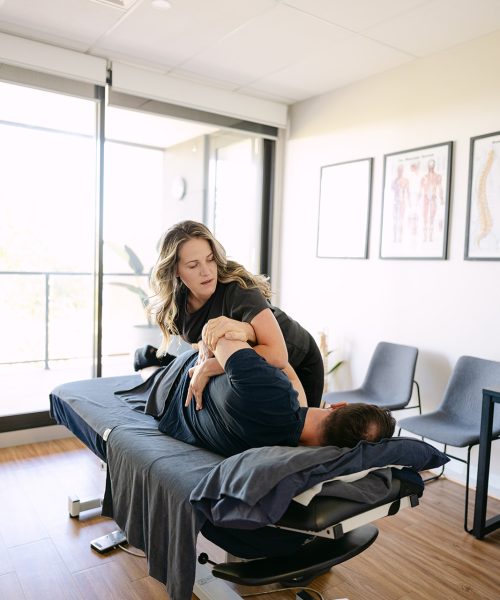
- Position the muscle or joint carefully
- Ask you to gently contract a muscle against resistance
- Guide you to relax
- Move the joint or muscle into improved range
This sequence may be repeated several times.
Most people find MET comfortable and controlled, with minimal discomfort.
Many patients notice improved movement immediately after treatment.
Evidence & research
Muscle Energy Technique is a widely used manual therapy approach in musculoskeletal care.
Research suggests MET may help:
- Improve joint range of motion
- Reduce muscle tightness
- Reduce pain in some musculoskeletal conditions
- Improve functional movement
Evidence varies by condition and study design, but results generally support MET as a useful adjunct treatment.
Key research examples
Thomas et al., 2019 — Systematic Review
Reported MET improves range of motion in various musculoskeletal conditions.
Journal of Bodywork and Movement Therapies.
Wilson et al., 2003 — Randomised Controlled Trial
Found MET improved spinal mobility in people with acute low back pain.
Journal of Orthopaedic & Sports Physical Therapy.
Ballantyne et al., 2003 — Clinical Study
Demonstrated reduced hamstring tightness following MET treatmen
Clinical interpretation
MET is best viewed as:
- A mobility restoration technique
- A neuromuscular re-education approach
- Most effective when combined with rehabilitation and movement training
Safety and suitability
MET is considered very safe and well tolerated because it uses low force and controlled muscle activation.
It is often suitable for people who:
- Prefer gentle treatment
- Are sensitive to pressure
- Are recovering from injury
- Cannot tolerate more direct manual techniques
Your osteopath will assess suitability before treatment.
Frequently asked questions
Does MET hurt?
No. Contractions are gentle and controlled.
Do I need to be strong or fit?
No. Contractions are very light.
Is it safe if I am injured?
Yes. It is commonly used in rehabilitation settings.
How many treatments will I need?
This depends on your condition and recovery goals.
Is MET the same as stretching?
Not exactly. MET uses controlled muscle contraction to help muscles relax and lengthen more effectively than passive stretching alone.
Why we use MET at Live Well
We use MET frequently because it:
- Is gentle and precise
- Improves mobility safely
- Helps retrain muscle function
- Prepares the body for rehabilitation
- Supports long-term movement improvement
It allows patients to actively participate in their treatment, which often improves outcomes.
Integration with rehabilitation (our point of difference)
At Live Well, MET is integrated with:
- Exercise rehabilitation
- Clinical Pilates
- Soft tissue therapy
- Joint mobilisation
- Movement retraining
This ensures improved mobility translates into lasting functional change.
Related treatments
- Soft Tissue Therapy
- Joint Articulation
- Exercise Rehabilitation
- Clinical Pilates
- Myofascial Release