
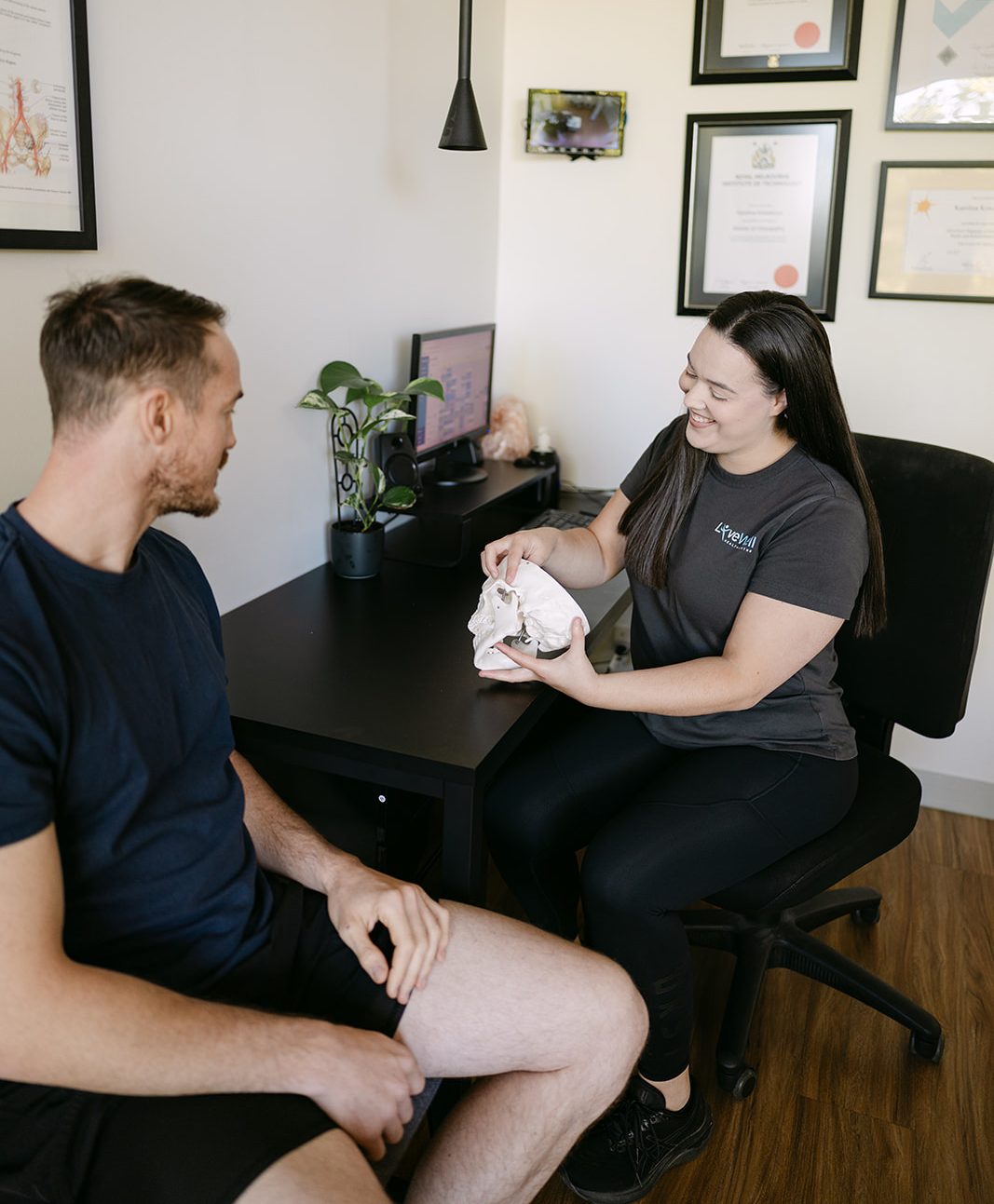
TMJ Treatment in Osteopathy
Comprehensive Care for Jaw Pain & Dysfunction — Melbourne & Caroline Springs
Temporomandibular Joint (TMJ) treatment in osteopathy focuses on improving jaw movement, reducing pain, and restoring normal function of the jaw and surrounding structures.
At Live Well Health Centre, TMJ treatment is never just about the jaw.
We assess and treat the entire system involved in jaw function, including the musculature of the face, neck and back, breathing patterns, and lifestyle factors.
What is it? (plain English)
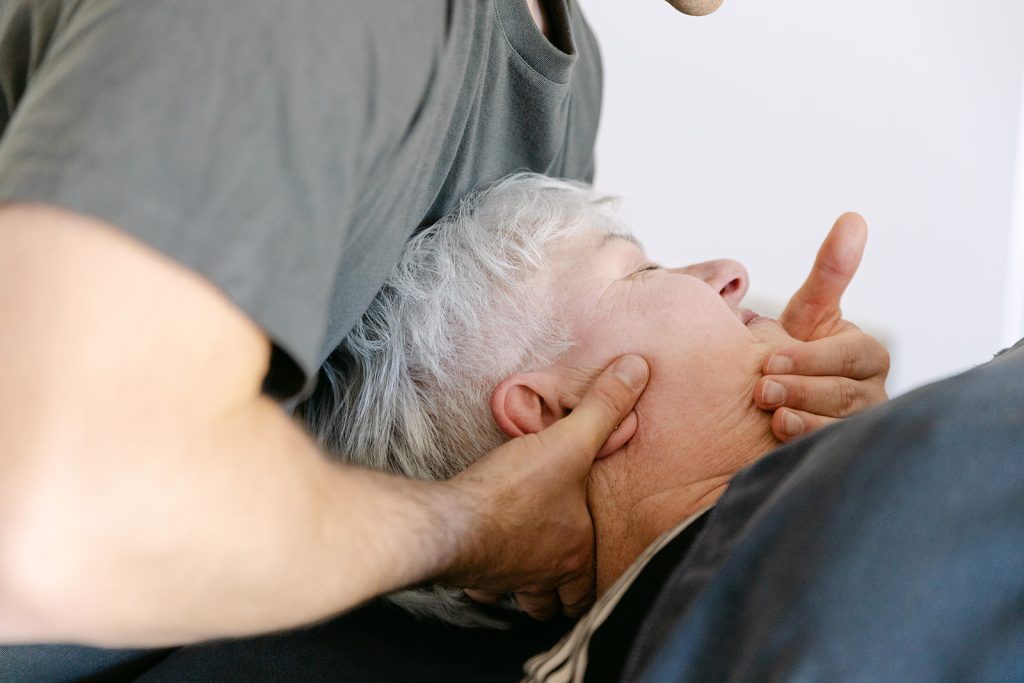
TMJ treatment involves hands-on techniques to improve how the jaw joint and surrounding muscles move and function.
Treatment may include:
- External muscle and joint treatment
- Posture correction
- Neck and upper spine treatment
- Internal (intra-oral) techniques when appropriate
The goal is to reduce strain on the jaw and restore smooth, comfortable movement.
How it works (simple physiology)
The jaw does not work in isolation.
Jaw movement is influenced by:
- Neck posture
- Muscle tension in the face and head
- Upper cervical spine function
- Breathing patterns
- Stress and clenching habits
When these systems are not working well together, the jaw can become overloaded.
Osteopathic TMJ treatment helps by:
- Reducing muscle tension around the jaw
- Improving joint mechanics
- Normalising nerve and muscle activity
- Improving head and neck alignment
- Reducing mechanical strain
Treating related structures often improves jaw symptoms more effectively than focusing on the jaw alone.
Who it helps / conditions treated
TMJ treatment may help people experiencing:
- Jaw pain or stiffness
- Clicking or popping jaw
- Difficulty opening or closing the mouth
- Teeth clenching or grinding
- Facial tension
- Headaches linked to jaw tension
- Ear discomfort related to jaw function
- Difficulty with eating
- Patients requiring major dental procedures
It is particularly helpful when symptoms involve both the jaw and surrounding muscles or posture.
What to expect in treatment
Your osteopath will perform a comprehensive assessment including:
- Jaw movement
- Neck and upper spine mobility
- Muscle tension
- Posture
- Functional habits (clenching, breathing, etc.)
Treatment may include:
- Gentle joint mobilisation
- Muscle release techniques
- Posture correction
- Movement retraining
- Internal (intra-oral) techniques if appropriate
- Education on lifestyle factors
Internal (intra-oral) techniques
Some TMJ muscles are located inside the mouth and cannot be accessed externally.
When clinically appropriate, your osteopath may use gloved hands to gently treat these muscles.
This is always:
- Explained beforehand
- Performed with explicit consent
- Optional
- Conducted using strict hygiene standards
Many patients find internal techniques highly effective for reducing deep jaw muscle tension.
Evidence & research
Manual therapy is commonly used in the management of temporomandibular disorders (TMD).
Research suggests manual therapy may:
- Reduce pain
- Improve jaw mobility
- Improve function
- Reduce muscle tension
Best outcomes are typically seen when manual therapy is combined with education and behavioural management.
Key research examples
La Touche et al., 2009 — Systematic Review
Manual therapy reduced pain and improved mouth opening in TMD patients.
Journal of Oral Rehabilitation.
Armijo-Olivo et al., 2016 — Systematic Review
Manual therapy combined with exercise improved function and pain in temporomandibular disorders.
Kalamir et al., 2012 — Randomised Clinical Trial
Manual therapy targeting jaw and cervical spine improved pain and jaw function.
Clinical interpretation
TMJ dysfunction is often multifactorial.
Best outcomes occur when treatment addresses:
- Jaw mechanics
- Muscle tension
- Posture
- Behavioural habits
This aligns with the osteopathic whole-body approach.
Safety and suitability
TMJ treatment is generally safe when performed by trained practitioners.
Internal techniques are only used:
- When appropriate
- With informed consent
- With sterile clinical procedure
Your comfort and control are always prioritised.
Frequently asked questions
Is internal jaw treatment necessary?
Not always. It is used only when clinically helpful.
Is intra-oral treatment uncomfortable?
It may feel unusual but should not be painful.
Can TMJ problems come from the neck?
Yes. Neck and posture are strongly linked to jaw function.
Will I need other healthcare providers?
Sometimes. Collaborative care often produces the best outcomes.
Why we use a whole-body TMJ approach at Live Well
We treat more than just the jaw because TMJ problems rarely exist in isolation.
We assess and treat:
- Neck and upper spine
- Head posture
- Muscle patterns
- Breathing and clenching habits
- Lifestyle contributors
This holistic model is a key difference in osteopathic care.
Collaboration with other healthcare providers
TMJ care often benefits from multidisciplinary management.
When appropriate, we may refer you to:
- Dentists (for splints / bite guards)
- Oral surgeons
- Maxillofacial specialists
- Medical practitioners (e.g. Botox for severe muscle overactivity)
- Other allied health providers
We believe collaboration provides the best chance of meaningful relief.
Integration with rehabilitation (our point of difference)
TMJ treatment at Live Well may include:
- Jaw exercises
- Posture retraining
- Neck rehabilitation
- Stress and habit management
- Movement education
This supports long-term improvement — not just short-term symptom relief.
Related treatments
- Joint Mobilisation
- Soft Tissue Therapy
- Trigger Point Therapy
- Exercise Rehabilitation
- Postural Correction
- Dry needling
- Breath work