
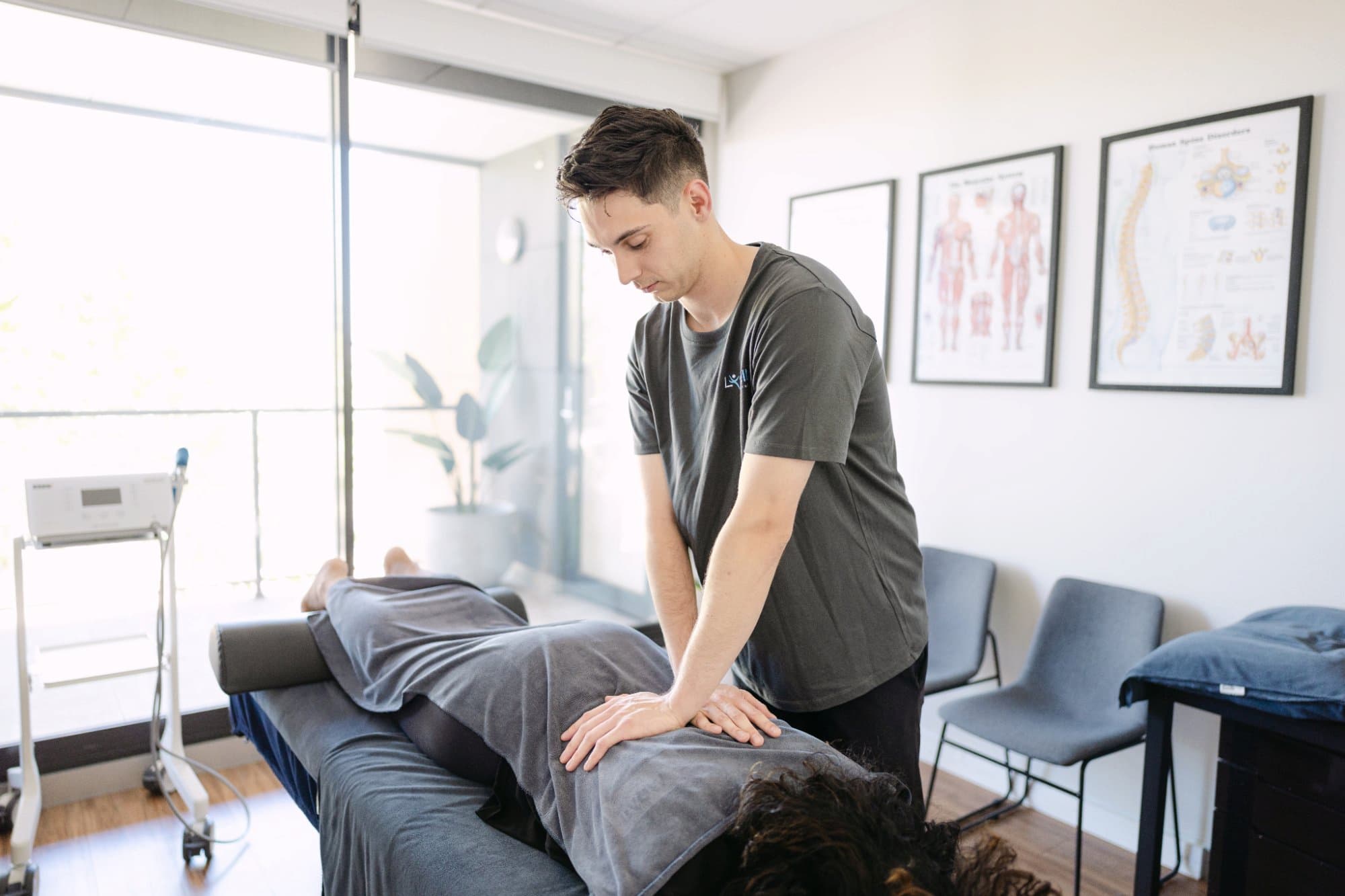
Back Pain
Osteopathic Management for Back Pain — Melbourne & Caroline Springs
Back pain is one of the most common musculoskeletal problems worldwide and a leading reason people seek healthcare.
At Live Well Health Centre, osteopaths help assess and manage back pain by addressing movement, muscle function, joint mobility, posture, and contributing lifestyle factors.
Our approach focuses on improving how your body functions, supporting recovery, and helping reduce the likelihood of recurrence.
What is back pain?
Back pain refers to discomfort, stiffness, or restricted movement felt anywhere along the spine — most commonly in the lower back (lumbar region), but also in the mid-back (thoracic region).
It may be:
- acute (recent onset)
- subacute
- persistent or recurrent
In many cases, back pain is described as non-specific, meaning no single structural cause is identified. Instead, symptoms often relate to movement dysfunction, tissue sensitivity, or mechanical strain.
Back pain can vary in intensity and may affect daily activities such as sitting, standing, lifting, or sleeping.
Common symptoms
Back pain may involve:
- localised pain or aching
- stiffness or reduced mobility
- pain with movement or certain positions
- muscle tightness or spasm
- difficulty bending, lifting, or twisting
Some people may also experience:
- referred pain into the hips or buttocks
- discomfort after prolonged sitting or activity
If symptoms include significant neurological changes (such as weakness, numbness, or loss of bladder control), urgent medical assessment is required.
What causes back pain?
Back pain is often influenced by multiple factors rather than a single injury.
Common contributing factors include:
- muscle strain or overload
- reduced joint mobility
- prolonged sitting or posture-related stress
- sudden changes in activity level
- repetitive lifting or physical work
- reduced physical conditioning
- stress and muscle tension
- previous injury
In some cases, structural findings such as disc changes or joint degeneration may be present, but these do not always correlate directly with pain.
Who is most likely to experience back pain?
Back pain can affect people of all ages.
It is more common in:
- desk-based workers
- people who perform repetitive lifting
- physically demanding occupations
- athletes
- people returning to activity after injury
- pregnancy and postnatal periods
- individuals with low activity levels
How is back pain assessed?
Osteopathic assessment involves:
- detailed health history
- movement and posture evaluation
- joint and muscle examination
- functional testing
Imaging (such as MRI or X-ray) is not routinely required for most back pain but may be recommended if clinically indicated or if symptoms suggest underlying pathology.
Where appropriate, referral to a GP or specialist may be recommended.
How osteopathy may help manage back pain
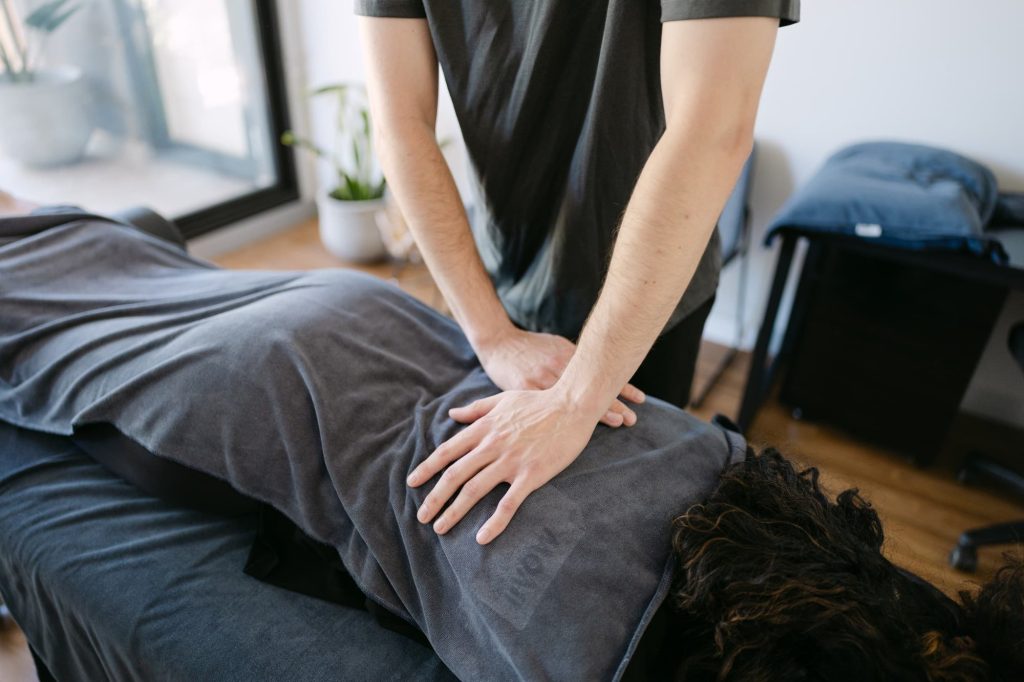
Osteopaths help manage back pain by addressing factors that influence how the spine and surrounding tissues function.
Management may include:
- improving joint mobility
- reducing muscle tension
- supporting movement patterns
- guiding safe activity and exercise
- helping you return to normal function
Care is individualised and may involve education, movement strategies, and rehabilitation support.
Osteopathy does not focus only on the painful area — contributing factors such as posture, work demands, and physical conditioning are also considered.
Techniques that may be used
Depending on assessment findings, osteopathic management may include:
- joint mobilisation or articulation
- soft tissue techniques
- muscle energy technique (MET)
- exercise rehabilitation
- clinical Pilates
- movement retraining
- shockwave therapy (in selected cases)
Treatment selection depends on individual presentation and clinical reasoning.
Evidence and research
Clinical guidelines recommend conservative management for most back pain.
Evidence supports approaches that include:
- manual therapy
- exercise therapy
- patient education
- activity modification
These are commonly recommended as first-line management.
Key guideline and research sources
World Health Organization (2023) – Chronic Low Back Pain Guidelines
Recommend non-surgical, conservative management including exercise and education.
American College of Physicians Clinical Practice Guideline (2017)
Recommends non-pharmacological therapies including manual therapy and exercise.
National Institute for Health and Care Excellence (NICE) Guidelines – Low Back Pain
Recommend manual therapy only as part of a treatment package including exercise.
Systematic reviews consistently show that combined approaches involving movement and education are important in back pain management.
What to expect from management
Management plans vary depending on:
- duration of symptoms
- contributing factors
- activity demands
- individual goals
Some people improve quickly, while others require longer-term management and rehabilitation.
Active participation — including movement and exercise — is often an important part of recovery.
Self-management and lifestyle support
Education and activity are key components of back pain management.
Your osteopath may guide:
- movement and posture strategies
- load management
- graded return to activity
- strengthening or mobility exercises
Remaining active within tolerance is generally recommended for most back pain presentations.
When to seek medical review
Immediate medical assessment is recommended if back pain is associated with:
- significant trauma
- progressive weakness or numbness
- changes in bowel or bladder function
- unexplained weight loss
- fever or systemic illness
If unsure, seek professional advice.
Frequently asked questions
Do I need a scan for back pain?
Most back pain does not require imaging unless specific clinical indicators are present.
Should I rest or stay active?
For most people, staying active within tolerance is recommended.
Can back pain come back?
Back pain can recur. Rehabilitation and movement strategies may help reduce recurrence risk.
Is back pain serious?
Most back pain is not due to serious disease, but proper assessment is important.
Related conditions
- Sciatica
- Neck pain
- Disc irritation
- Postural strain
- Pregnancy back pain
Not sure if your pain is back pain?
If you are unsure what is causing your symptoms, an osteopathic assessment can help identify contributing factors and guide appropriate management.
Book an appointment to discuss your symptoms.