
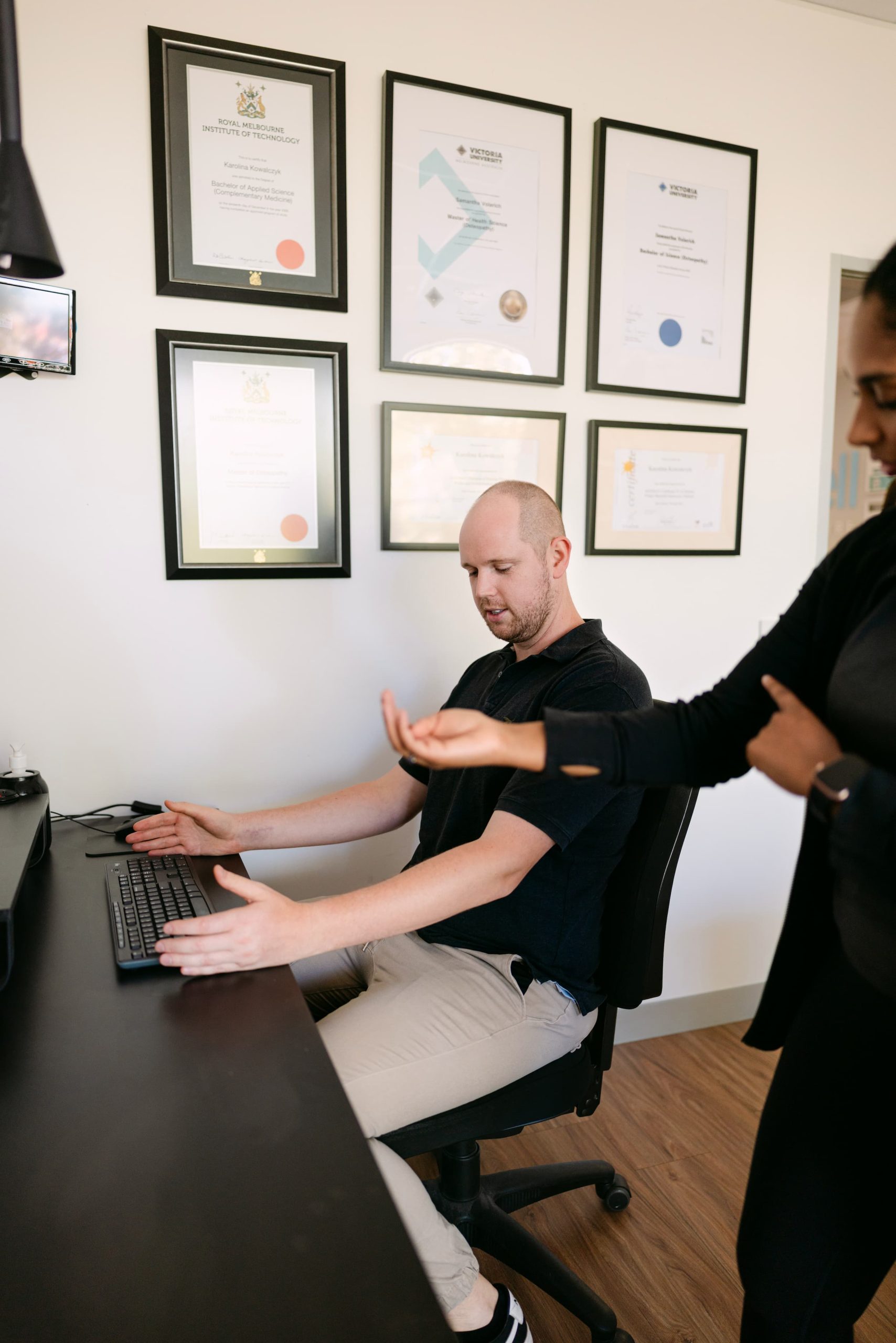
Desk Posture-Related Pain
Osteopathic Assessment & Supportive Management — Melbourne & Caroline Springs
Desk posture-related pain is a common musculoskeletal concern associated with prolonged sitting, computer work, and sustained positioning.
At Live Well Health Centre, our osteopaths provide assessment and evidence-informed management of posture-related discomfort. Care focuses on supporting movement efficiency, reducing physical strain, and helping individuals manage symptoms associated with desk-based work and daily activities.
Management is individualised and may be provided alongside care from your GP or other health professionals where appropriate.
What is desk posture-related pain?
Desk posture-related pain refers to musculoskeletal discomfort associated with prolonged sitting or sustained workstation positioning.
Commonly affected areas include:
- neck
- shoulders
- upper back
- lower back
- hips
- wrists and forearms
Symptoms often develop gradually and may fluctuate depending on workload, stress levels, and movement habits.
Common symptoms
Desk posture-related pain may involve:
- neck stiffness or tension
- shoulder or upper back discomfort
- lower back aching
- muscle fatigue during the workday
- headaches associated with prolonged sitting
- reduced movement tolerance
- discomfort that improves with movement or position change
Symptoms may increase during long periods of focused computer work or limited movement.
Why posture-related pain can occur
Prolonged sitting and sustained positioning can place continuous load on muscles and joints.
Contributing factors may include:
- limited movement variation
- sustained muscle activation
- reduced circulation during prolonged sitting
- workstation setup that does not support neutral positioning
- repetitive keyboard or mouse use
- increased mental or physical workload
- reduced physical conditioning
In many cases, symptoms relate to how the body manages sustained load over time rather than structural damage.
Who is more likely to experience desk posture-related pain?
This type of discomfort is more common in people who:
- work at a computer for extended periods
- perform prolonged seated tasks
- have limited movement breaks during the day
- use poorly adjusted workstations
- have high workload or concentration demands
- work from home without ergonomic setup
Osteopathic assessment for posture-related pain
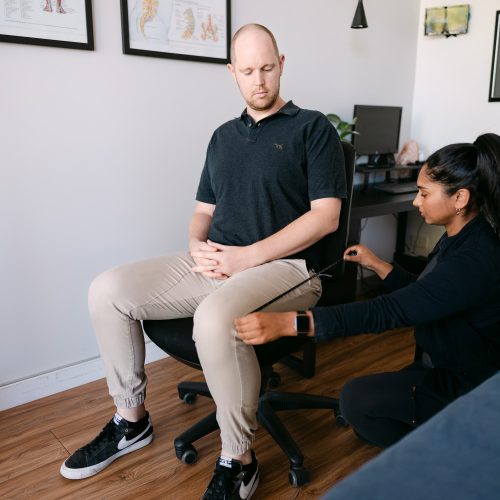
Assessment focuses on identifying factors that may contribute to physical strain. This may include:
- discussion of work habits and daily activity patterns
- posture and movement assessment
- evaluation of neck, spine, and shoulder function
- assessment of muscle coordination and load tolerance
- workstation or ergonomic discussion where relevant
If symptoms suggest the need for medical investigation, referral to your GP or specialist may be recommended.
Osteopathic care does not replace medical diagnosis or treatment.
How osteopathy may help manage desk posture-related pain
Osteopathic management aims to support comfortable movement and reduce physical strain associated with sustained sitting. This may involve:
- supporting joint and muscle function
- addressing movement patterns that increase load
- providing ergonomic and workstation guidance
- helping improve tolerance to sustained activity
- guiding activity pacing and movement breaks
Care is tailored to individual work demands and symptom patterns.
Approaches that may be used
Depending on assessment findings, management may include:
- gentle joint mobilisation where appropriate
- soft tissue techniques
- posture and ergonomic education
- movement retraining and load management
- exercise recommendations to support strength and endurance
- strategies to improve movement variation during the day
Programs are individualised and progressed gradually.
Evidence and clinical guidelines
Prolonged sitting and work-related musculoskeletal discomfort are widely recognised occupational health concerns. Management typically focuses on movement variation, ergonomic support, and physical conditioning.
Key evidence sources:
World Health Organization (WHO)
Musculoskeletal health and sedentary behaviour
https://www.who.int/news-room/fact-sheets/detail/musculoskeletal-conditions
Safe Work Australia
Work-related musculoskeletal disorder guidance
https://www.safeworkaustralia.gov.au
National Institute for Health and Care Excellence (NICE)
Workplace health and musculoskeletal management
https://www.nice.org.uk
British Journal of Sports Medicine
Sedentary behaviour and musculoskeletal health research
https://bjsm.bmj.com
These sources support movement variation, ergonomic adjustment, and physical activity as key components of managing work-related musculoskeletal discomfort.
What to expect from management
Experiences vary between individuals. Progress may depend on:
- duration and severity of symptoms
- daily sitting demands
- ability to modify workstation setup
- consistency of movement and exercise
Management focuses on supporting function and reducing symptom aggravation during work activities.
Self-management strategies your osteopath may discuss
- workstation setup adjustments
- scheduled movement breaks
- posture variation strategies
- strengthening and conditioning exercises
- pacing and workload management
- home or office ergonomic modifications
When to seek medical review
Seek medical advice if you experience:
- persistent or worsening pain
- neurological symptoms (numbness, weakness, tingling)
- symptoms affecting daily function
- pain following injury or trauma
- no improvement with conservative care
Frequently asked questions
Is poor posture the only cause of desk pain?
Multiple factors influence symptoms, including load tolerance, movement habits, and workstation setup.
Do ergonomic chairs solve posture-related pain?
Equipment may help, but movement variation and activity management are also important.
Is osteopathy a replacement for medical care?
No. Osteopathic care is supportive and may be used alongside medical management.
Related conditions
- Neck pain
- Tension-type headache
- Upper back pain
- Repetitive strain injury
- Shoulder pain
Book an assessment
If you are experiencing discomfort related to desk work or prolonged sitting, our osteopaths can assess your function and discuss appropriate supportive management.
Book an appointment to discuss your desk posture-related pain.