
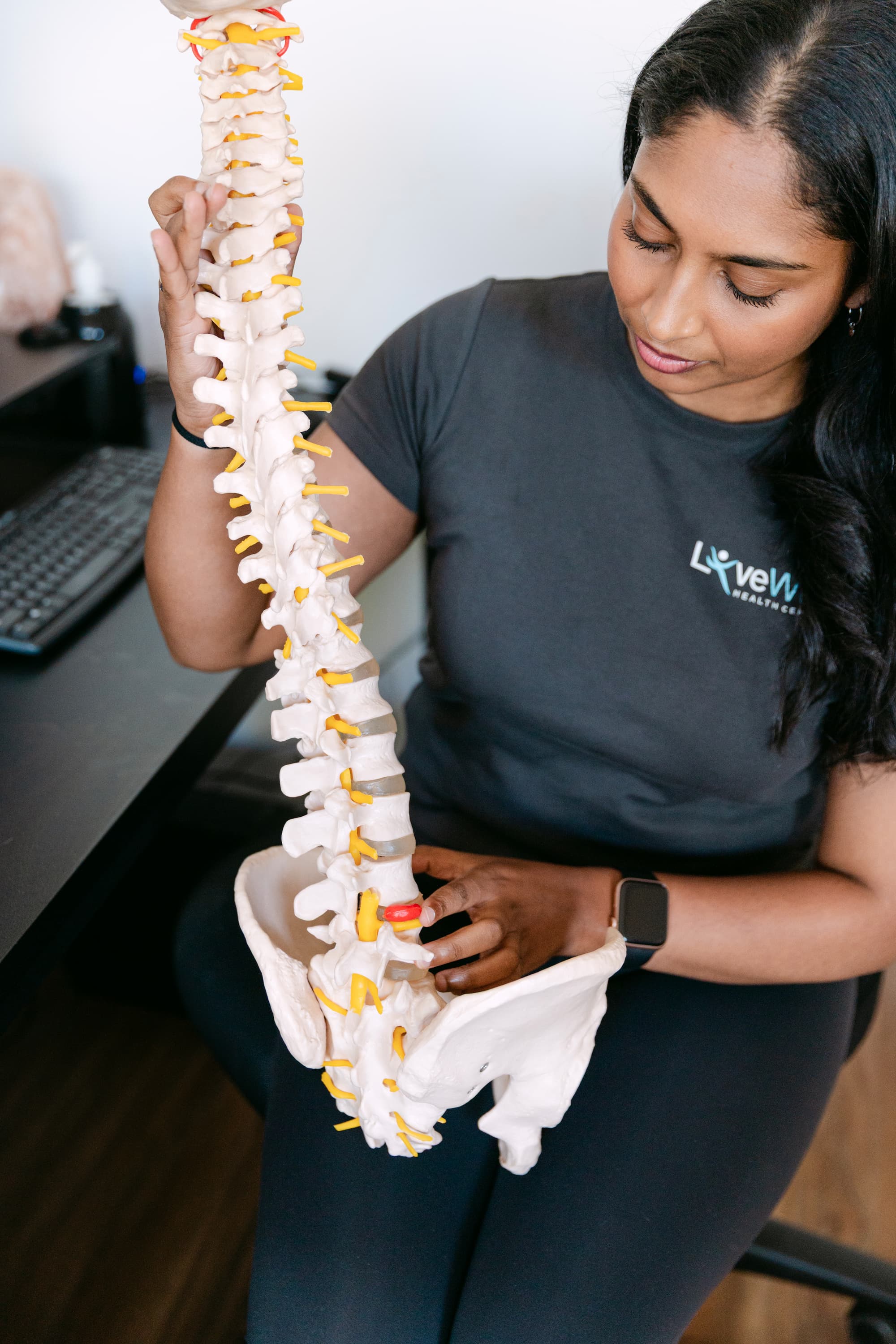
Disc Bulge / Disc Irritation
Osteopathic Management for Spinal Disc Pain — Melbourne & Caroline Springs
A disc bulge or disc irritation is a common cause of neck or back pain and may sometimes cause symptoms that travel into the arm or leg.
At Live Well Health Centre, osteopaths help assess and manage disc-related spinal pain by evaluating spinal movement, nerve sensitivity, and how surrounding muscles and joints support the spine.
Our approach focuses on improving movement, reducing protective muscle tension, supporting spinal load tolerance, and helping you return to comfortable daily activity.
What is a disc bulge or disc irritation?
Between each bone of the spine sits a spinal disc, which acts as a shock absorber and helps allow movement.
A disc has:
- a softer inner centre
- a tougher outer layer
A disc bulge occurs when the disc changes shape and extends slightly beyond its normal boundary.
A disc irritation refers to inflammation or sensitivity of the disc or surrounding nerve structures, which may occur with or without a visible bulge on imaging.
Disc changes are common and often part of normal ageing. Many people have disc bulges without symptoms.
Symptoms occur when disc changes affect nearby tissues or nerves.
Common symptoms
Symptoms vary depending on the spinal level involved.
Local symptoms
- neck or back pain
- stiffness
- pain with bending, sitting, or lifting
- muscle tightness or spasm
Nerve-related symptoms (if nerve involvement occurs)
- pain radiating into arm or leg
- tingling or pins and needles
numbness - reduced strength
Examples include:
- sciatica (leg symptoms from lower back)
- arm pain from cervical disc involvement
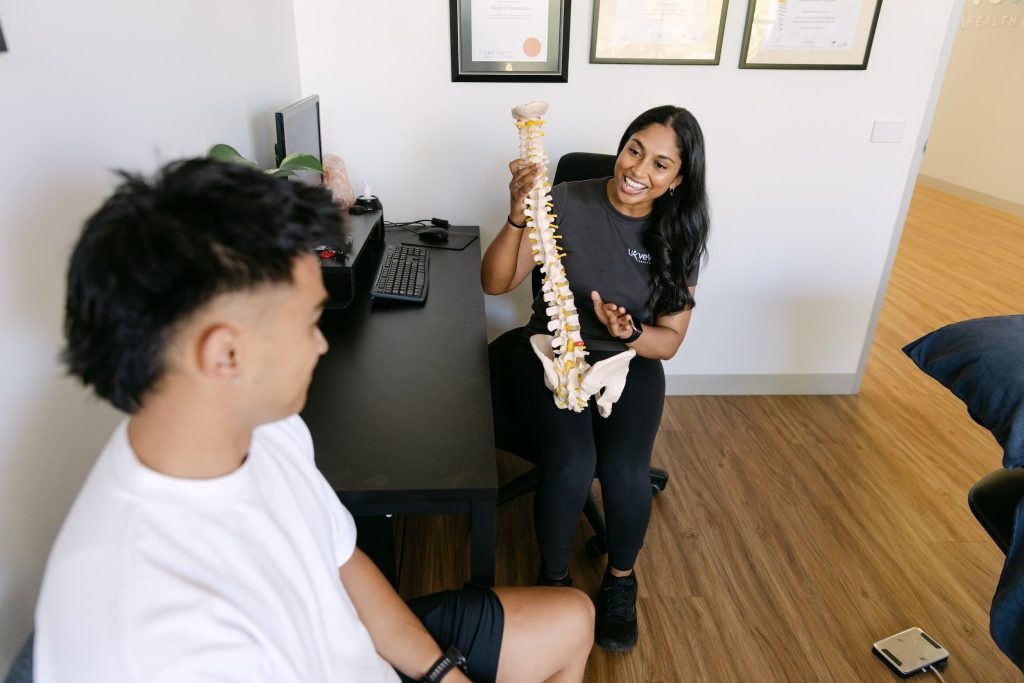
What causes disc bulges or disc irritation?
Disc changes may develop gradually or after increased mechanical stress.
Common contributing factors include:
- repetitive bending or lifting
- prolonged sitting
- poor load tolerance
- sudden heavy strain
- reduced spinal movement
- muscle weakness or fatigue
Age-related disc changes are normal and do not always cause pain.
Who is most likely to experience disc-related symptoms?
Disc bulges or irritation may occur in:
- adults aged 20–60
- people with sedentary work
- individuals performing heavy lifting
- people with sudden increases in activity
- those with previous spinal injury
How is disc-related pain assessed?
Osteopathic assessment typically includes:
- detailed symptom history
- movement testing of the spine
- nerve function assessment
- strength and reflex testing
- posture and load tolerance evaluation
- functional movement assessment
Assessment focuses on identifying mechanical and neurological contributors.
Imaging is not always required and is typically recommended only if clinically indicated.
Referral to a GP or specialist may be advised where appropriate.
How osteopathy may help manage disc bulge or disc irritation
Osteopaths help manage disc-related symptoms by addressing movement restriction, muscle guarding, and spinal load tolerance.
Management may involve:
- improving spinal mobility
- reducing protective muscle tension
- supporting nerve movement tolerance
- guiding gradual return to activity
- improving movement control and strength
Care is individualised and adapted to symptom severity and stage of recovery.
Rehabilitation is typically a central component of management.
Techniques that may be used
Based on assessment findings, management may include:
- gentle spinal mobilisation
- soft tissue techniques
- muscle energy technique (MET)
- nerve mobility exercises
- movement retraining
- postural and load management education
- exercise prescription
- clinical Pilates
High-force techniques are used cautiously and only if clinically appropriate.
Evidence & research
Clinical guidelines recommend conservative management as first-line care for most disc-related spinal pain.
Evidence supports:
- education and reassurance
- gradual return to movement
- structured exercise programs
- manual therapy combined with rehabilitation
- load management strategies
Many disc-related symptoms improve over time with conservative care.
Key evidence sources
Australian Commission on Safety and Quality in Health Care — Low Back Pain Clinical Care Standard
https://www.safetyandquality.gov.au/standards/clinical-care-standards/low-back-pain-clinical-care-standard
American College of Physicians — Non-invasive Treatments for Acute, Subacute and Chronic Low Back Pain
https://www.acpjournals.org/doi/10.7326/M16-2367
BMJ Clinical Review — Herniated Lumbar Disc
https://www.bmj.com/content/350/bmj.h1748
Systematic Review — Imaging Findings in Asymptomatic Individuals (disc changes common without pain)
https://www.ncbi.nlm.nih.gov/pmc/articles/PMC4464797/
Clinical interpretation
Conservative management focused on movement, education, and rehabilitation is widely recommended for most disc-related spinal pain unless serious neurological symptoms are present.
What to expect from management
Recovery depends on:
- severity of symptoms
- nerve involvement
- activity demands
- adherence to rehabilitation
Many people experience gradual improvement over weeks to months.
Active participation in rehabilitation is often important.
Self-management and lifestyle support
Your osteopath may guide:
- movement pacing strategies
- spinal mobility exercises
- strengthening programs
- sitting and lifting advice
- gradual return to activity
Avoiding complete rest is usually recommended unless symptoms are severe.
When to seek urgent medical care
Urgent medical assessment is required if symptoms include:
- loss of bladder or bowel control
- numbness in the saddle region
- progressive leg or arm weakness
- severe or worsening neurological symptoms
- significant trauma
These may indicate serious nerve involvement
Frequently asked questions
Is a disc bulge serious?
Many disc bulges are common and do not cause symptoms. Clinical assessment determines significance.
Do disc bulges heal?
Symptoms often improve as inflammation settles and movement tolerance improves.
Do I need surgery?
Most disc-related symptoms are managed conservatively. Surgical decisions are made by specialists when indicated.
Should I rest completely?
Prolonged rest is usually not recommended. Guided movement is generally beneficial.
Related conditions
- Sciatica
- Neck pain
- Low back pain
- Nerve-related pain
Not sure if your symptoms are disc-related?
If you are experiencing back pain, neck pain, or nerve symptoms, an osteopathic assessment can help determine contributing factors and guide appropriate management.
Book an appointment to discuss your symptoms.