
Migraine
Osteopathic Assessment & Supportive Management — Melbourne & Caroline Springs
Migraines are a complex neurological condition that can significantly affect daily function, work, and quality of life.
At Live Well Health Centre, our osteopaths provide assessment and supportive, evidence-informed management for people living with migraines. Care focuses on addressing musculoskeletal factors that may contribute to symptom patterns, supporting movement and posture, and helping individuals manage physical triggers where appropriate.
Management is individualised and may be provided alongside care from your GP or medical specialist.
What is a migraine?
Migraine is a neurological condition that commonly involves:
- moderate to severe headache
- sensitivity to light or sound
- nausea or vomiting
- visual or sensory disturbances (aura in some people)
Migraine is different from general headache. It often involves changes in brain signalling, nervous system sensitivity, and individual trigger patterns.
Episodes can vary in frequency, intensity, and duration.
Common migraine symptoms
Migraine may involve:
- throbbing or pulsating head pain
- pain on one or both sides of the head
- sensitivity to light, sound, or smell
- nausea or vomiting
- visual disturbance (flashing lights, blind spots)
- neck stiffness or tension
- fatigue before or after an episode
- difficulty concentrating
Some people experience warning symptoms hours or days before a migraine begins.
What can influence migraine symptoms?
Migraine is influenced by multiple interacting factors. These may include:
- neurological sensitivity
- stress and nervous system load
- sleep disruption
- hormonal changes
- environmental triggers
- muscle tension or postural strain
- neck movement sensitivity
- physical fatigue
Not all migraines have identifiable triggers, and patterns vary between individuals.
When is musculoskeletal assessment helpful?
Some people with migraine also experience:
- neck pain or stiffness
- upper back or shoulder tension
- headaches associated with posture or prolonged sitting
- movement sensitivity of the neck
- physical strain that appears to worsen symptoms
Assessment may help identify whether musculoskeletal factors are contributing to symptom patterns or physical discomfort between episodes.
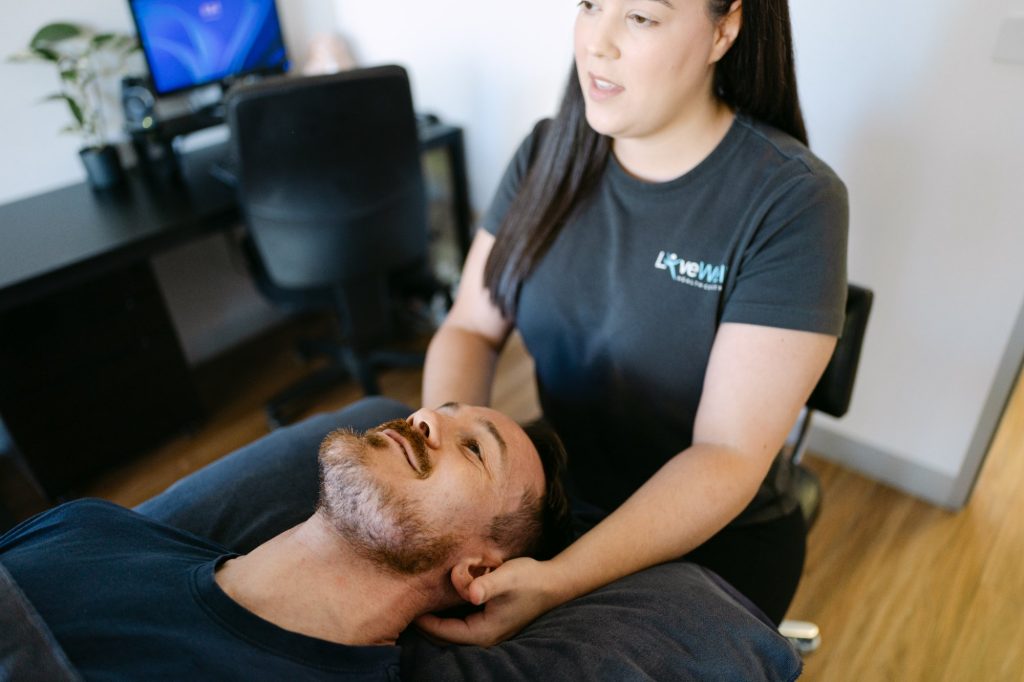
Osteopathic assessment for migraine care
Assessment is tailored to your symptoms and history. It may include:
- detailed health and headache history
- identification of symptom patterns and triggers
- posture and movement assessment
- evaluation of neck and upper back function
- muscle tension and load tolerance assessment
Where appropriate, we may recommend review or co-management with your GP, neurologist, or other health professional.
Osteopathic care does not replace medical migraine management.
How osteopathy may support people living with migraines
Osteopathic management aims to support comfort, function, and physical wellbeing. This may involve:
- addressing musculoskeletal tension or movement restriction
- supporting comfortable neck and upper back function
- providing education on posture and physical load
- helping manage physical triggers where relevant
- supporting general movement and activity tolerance
Management is individualised and based on clinical findings.
Approaches that may be used
Depending on assessment findings, care may include:
- gentle joint mobilisation where appropriate
- soft tissue techniques
- movement and posture guidance
- ergonomic and activity advice
- relaxation or breathing strategies
- exercise recommendations to support movement tolerance
Care is adapted to symptom sensitivity and individual preference.
Evidence and clinical guidelines
Migraine management is typically multidisciplinary. Clinical guidelines emphasise medical care, trigger management, and supportive lifestyle strategies.
Musculoskeletal care may be used as part of broader management for some individuals.
Key evidence sources:
International Headache Society (IHS)
Classification and diagnosis of migraine
National Institute for Health and Care Excellence (NICE)
Headaches in over 12s: diagnosis and management
American Headache Society
Migraine information and clinical guidance
British Journal of Sports Medicine
Exercise and headache management research
World Health Organization (WHO)
Headache disorders fact sheet
These sources recognise migraine as a neurological condition requiring comprehensive management. Supportive physical care may form one component of an overall plan.
What to expect from management
Experiences vary between individuals. Outcomes depend on:
- migraine type and frequency
- medical management
- trigger exposure
- physical activity demands
- consistency of self-management strategies
The aim of care is to support physical comfort and function alongside broader migraine management.
Self-management strategies your osteopath may discuss
- posture and workstation setup
- pacing of physical activity
- neck movement and mobility strategies
- stress and tension awareness
- sleep positioning
- gradual exercise planning
These strategies aim to support physical wellbeing and reduce strain where possible.
When to seek urgent medical care
Seek immediate medical attention if you experience:
- sudden severe “worst ever” headache
- headache after head injury
- neurological symptoms (weakness, speech difficulty, vision loss)
- fever with neck stiffness
- new or unusual headache pattern
- change in migraine pattern or severity
Always consult your GP if symptoms change or worsen.
Frequently asked questions
Can osteopathy cure migraines?
Migraine is a neurological condition. Osteopathy provides supportive musculoskeletal management and does not cure migraine.
Should I continue medical care?
Yes. Osteopathic care is complementary and does not replace medical treatment.
Can neck tension trigger migraines?
Some people report neck discomfort associated with migraine episodes. Individual assessment helps determine relevance.
Related conditions
- Tension-type headache
- Neck pain
- Upper back pain
- Postural strain
- Persistent headache disorders
Book an assessment
If you experience migraines and would like support managing musculoskeletal factors or physical triggers, our osteopaths can assess your symptoms and discuss appropriate supportive care.
Book an appointment at Live Well Health Centre — Melbourne & Caroline Springs.