
Sciatica
Osteopathic Management for Sciatica — Melbourne & Caroline Springs
Sciatica is a term used to describe nerve-related pain that travels from the lower back into the buttock and down the leg.
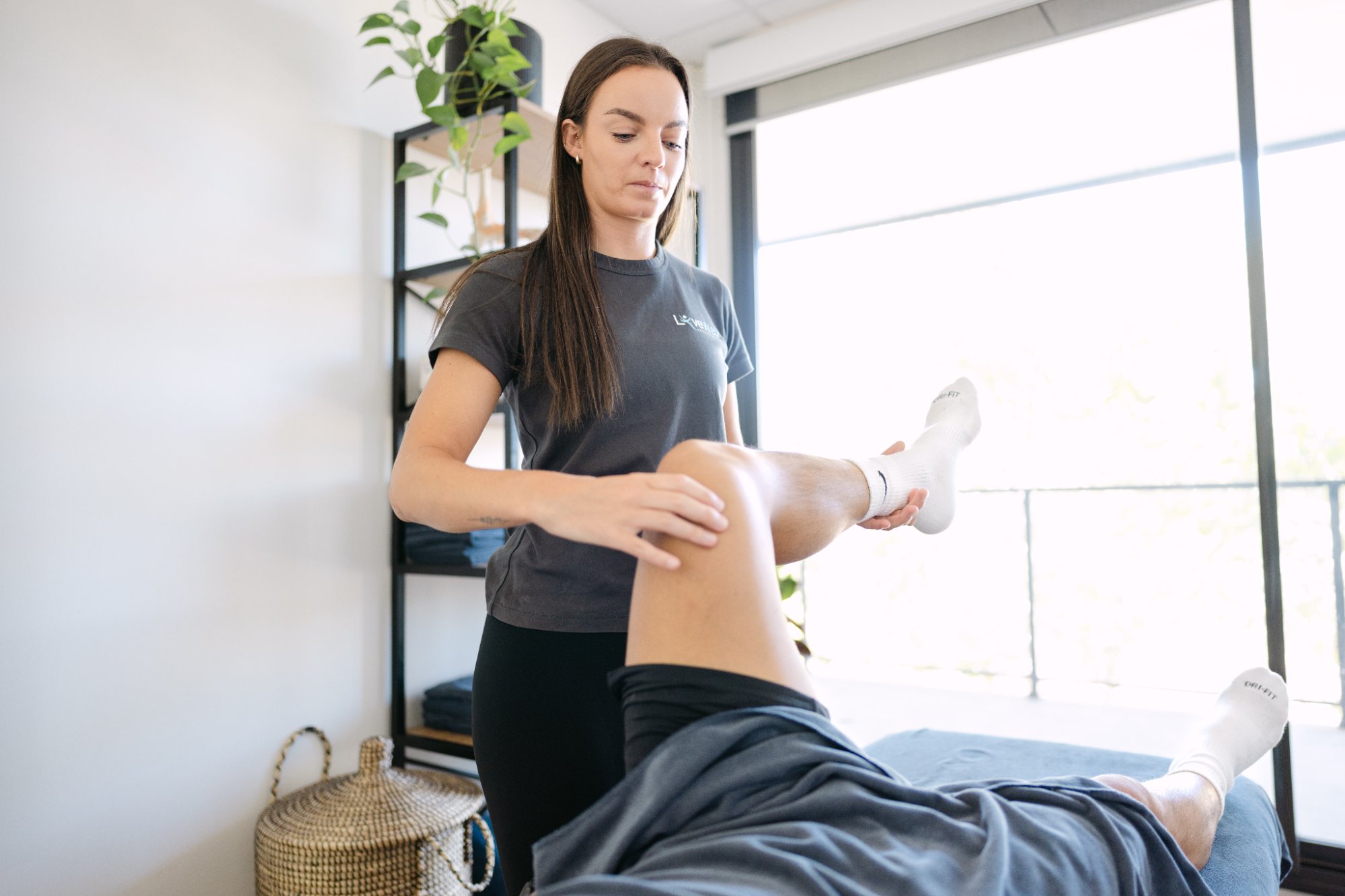
At Live Well Health Centre, osteopaths help assess and manage sciatica by identifying factors that may be affecting the sciatic nerve and supporting recovery through movement, function, and rehabilitation.
Our focus is on improving mobility, reducing mechanical irritation, and helping you return to normal activity safely.
What is sciatica?
Sciatica describes symptoms caused by irritation or sensitivity of the sciatic nerve, the largest nerve in the body.
The sciatic nerve originates in the lower spine and travels through the buttock and down the leg.
When this nerve becomes irritated or compressed, symptoms may be felt anywhere along its pathway.
Sciatica is not a diagnosis itself — it is a description of nerve-related symptoms that may have different underlying causes.
Common symptoms
Sciatica symptoms typically affect one side of the body and may include:
- pain travelling from the lower back into the buttock or leg
- sharp, burning, or shooting pain
- tingling or “pins and needles”
- numbness
- muscle weakness in the leg
- symptoms that worsen with sitting or certain movements
Symptoms can range from mild irritation to significant discomfort affecting walking or daily function.
Progressive weakness or significant neurological changes require medical assessment.
What causes sciatica?
Sciatic nerve irritation can occur for several reasons.
Common causes include:
- disc bulge or disc herniation affecting nerve roots
- narrowing of spinal spaces (spinal stenosis)
- joint or movement dysfunction in the lower spine
- muscle tension or compression around the nerve pathway
- inflammation around nerve structures
In some cases, symptoms develop gradually. In others, they may begin after lifting, bending, or prolonged sitting.
Who is most likely to experience sciatica?
Sciatica can occur at any age but is more common in adults.
It is frequently seen in:
- people with lower back problems
- individuals who sit for prolonged periods
- those performing repetitive lifting or bending
- physically demanding occupations
- people with reduced physical conditioning
- individuals with previous spinal injury
How is sciatica assessed?
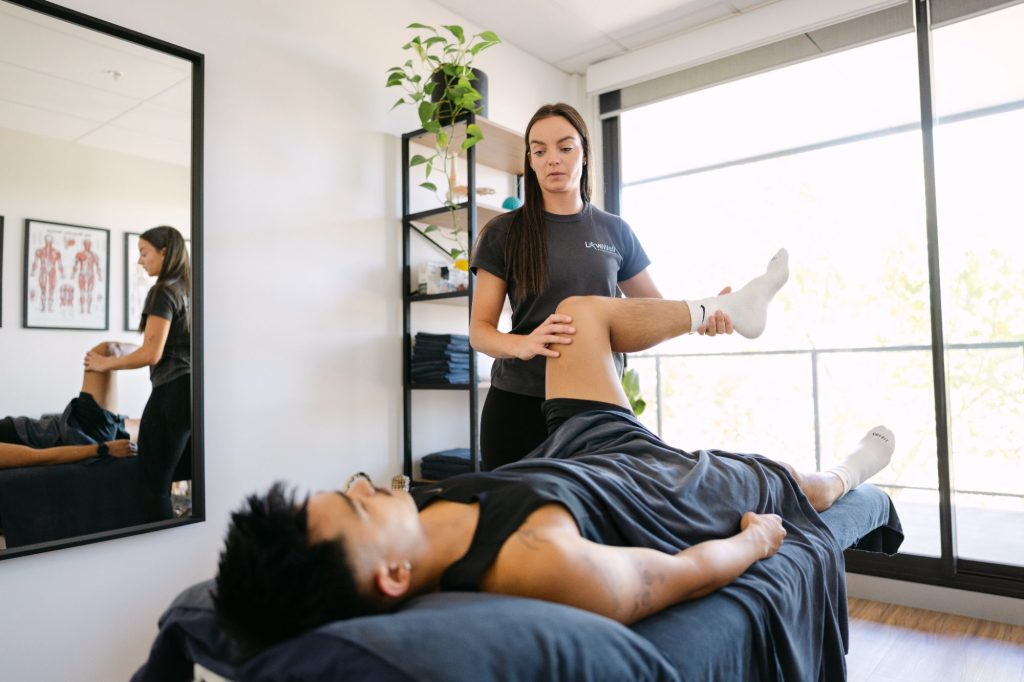
Osteopathic assessment typically includes:
- detailed history of symptoms
- neurological screening
- movement and functional testing
- spinal and muscle examination
Because sciatica involves nerve function, assessment aims to identify possible sources of irritation and determine whether further medical investigation is required.
Imaging may be recommended if symptoms are severe, persistent, or progressive.
Referral to a GP or specialist may be advised where appropriate.
How osteopathy may help manage sciatica
Osteopaths help manage sciatica by addressing mechanical and functional factors that may influence nerve irritation.
Management may involve:
- improving spinal and pelvic movement
- reducing muscle tension around the nerve pathway
- supporting safe movement patterns
- guiding activity modification
- providing rehabilitation and exercise strategies
Care is individualised and focuses on supporting the body’s ability to function and recover.
Osteopathic management often forms part of a broader conservative care approach.
Techniques that may be used
Based on assessment findings, management may include:
- joint mobilisation or articulation
- soft tissue techniques
- muscle energy technique (MET)
- movement rehabilitation
- nerve mobility exercises (when appropriate)
- clinical Pilates
- postural and load management strategies
Treatment selection depends on clinical reasoning and individual presentation.
Evidence and research
Clinical guidelines recommend conservative management as the first approach for most cases of sciatica.
Evidence supports:
- physical therapy and movement-based rehabilitation
- manual therapy combined with exercise
- patient education and activity modification
These approaches are widely recommended before considering more invasive interventions in many cases.
Key guideline and research sources
National Institute for Health and Care Excellence (NICE) — Low Back Pain and Sciatica Guidelines
Recommend conservative management including exercise and manual therapy as part of care.
American College of Physicians Clinical Practice Guidelines
Recommend non-pharmacological therapies as initial management for back-related pain conditions.
Systematic reviews of conservative care for lumbar radiculopathy
Support rehabilitation and movement-based approaches as part of management.
Clinical interpretation
Multimodal care addressing movement, function, and mechanical factors is widely recommended in the management of nerve-related spinal pain.
What to expect from management
Recovery experiences vary depending on:
- underlying cause
- symptom duration
- severity of nerve involvement
- individual health and activity level
Some people experience gradual improvement over time with conservative care and rehabilitation.
Active participation in movement and exercise is often an important component of management.
Self-management and lifestyle support
Education and activity are key components of managing sciatica.
Your osteopath may guide:
- movement modification strategies
- graded return to activity
- posture and sitting strategies
- strengthening and mobility exercises
- load management
Remaining appropriately active is often recommended where tolerated.
When to seek urgent medical review
Immediate medical assessment is required if symptoms include:
- loss of bowel or bladder control
- numbness in the saddle region
- progressive leg weakness
- severe or worsening neurological symptoms
These may indicate serious nerve involvement requiring urgent care.
Frequently asked questions
Is sciatica permanent?
Many cases improve over time, though recovery varies between individuals.
Should I rest if I have sciatica?
Prolonged rest is generally not recommended. Guided movement is often helpful.
Do I need surgery for sciatica?
Most cases are managed conservatively. Surgical decisions are made by medical specialists when indicated.
Can sitting make sciatica worse?
Prolonged sitting may increase pressure on spinal structures and influence symptoms.
Related conditions
- Lower back pain
- Disc irritation
- Spinal stenosis
- Hip pain
Not sure if your leg pain is sciatica?
If you are unsure what is causing your symptoms, an osteopathic assessment can help identify contributing factors and guide appropriate management.
Book an appointment to discuss your symptoms.