
Shoulder Impingement (Subacromial Pain Syndrome)
Osteopathic Management for Shoulder Impingement — Melbourne & Caroline Springs
Shoulder impingement is a common cause of shoulder pain, especially during lifting, reaching overhead, or repetitive arm use.
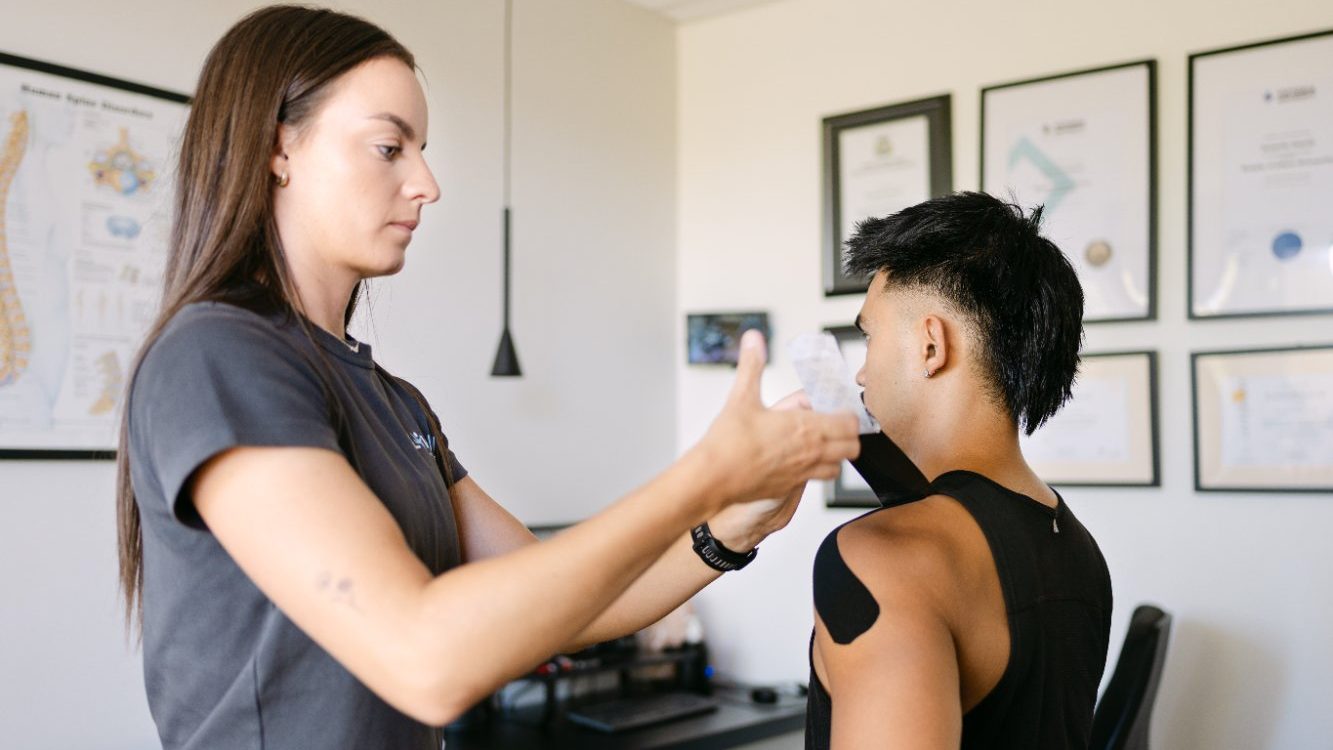
At Live Well Health Centre, osteopaths help assess and manage shoulder impingement by evaluating how the shoulder, shoulder blade, neck, and upper back move together and share load.
Our approach focuses on improving movement coordination, supporting tendon and muscle function, and helping you return to comfortable activity.
What is shoulder impingement?
Shoulder impingement is a term often used to describe pain arising when structures in the shoulder become sensitive to movement or load — particularly during overhead activity.
Many healthcare professionals now use the term subacromial pain syndrome or rotator cuff–related shoulder pain, as symptoms often relate to how the shoulder moves and functions rather than a single structure being “pinched”.
The condition commonly involves:
- rotator cuff tendons
- subacromial bursa
- shoulder movement coordination
Symptoms may develop gradually or after repetitive overhead activity.
Common symptoms
Shoulder impingement commonly causes:
- pain when lifting the arm overhead
- discomfort reaching behind the back
- pain when lowering the arm
- shoulder weakness or fatigue
- difficulty sleeping on the affected side
- painful arc of movement (pain between certain lifting ranges)
Pain is often felt on the front or outer part of the shoulder and may spread into the upper arm.
What causes shoulder impingement?
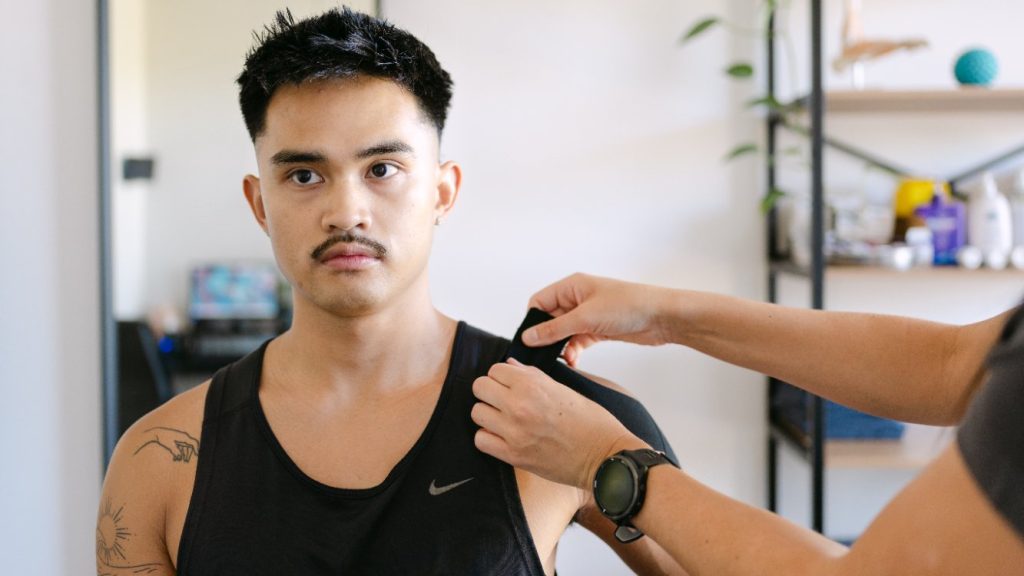
Shoulder impingement is usually influenced by how the shoulder moves and handles load.
Common contributing factors include:
- repetitive overhead movement
- reduced shoulder blade control
- rotator cuff muscle weakness or fatigue
- reduced shoulder or upper back mobility
- sudden increase in activity or training
- sustained posture (e.g. desk work)
- previous shoulder injury
The shoulder relies on coordinated movement between the arm, shoulder blade, and upper spine. When this coordination changes, tissue load may increase.
Who is most likely to experience shoulder impingement?
Shoulder impingement can occur at any age but is commonly seen in:
- people performing repetitive overhead tasks
- athletes (throwing, swimming, gym training)
- manual workers
- desk-based workers
- individuals returning to activity after injury
- adults over 30–40
How is shoulder impingement assessed?
Osteopathic assessment typically includes:
- detailed symptom and activity history
- shoulder movement testing
- strength assessment
- shoulder blade movement evaluation
- neck and upper spine examination
- functional movement assessment
Assessment focuses on identifying mechanical and functional contributors to shoulder load.
Imaging may be recommended if clinically indicated or if symptoms do not respond to conservative management.
Referral to a GP or specialist may be advised where appropriate.
How osteopathy may help manage shoulder impingement
Osteopaths help manage shoulder impingement by addressing factors that influence movement, muscle coordination, and tissue load.
Management may involve:
- improving shoulder and upper back mobility
- restoring coordinated shoulder blade movement
- reducing muscle tension
- guiding progressive strengthening
- supporting gradual return to activity
Care is individualised and often includes education about movement and load tolerance.
Rehabilitation is typically a central component of management.
Techniques that may be used
Based on assessment findings, management may include:
- joint mobilisation of shoulder and upper spine
- soft tissue techniques
- muscle energy technique (MET)
- progressive strengthening programs
- movement retraining
- clinical Pilates
- load management strategies
Technique selection depends on clinical reasoning and individual presentation.
Evidence and research
Clinical guidelines recommend exercise-based rehabilitation as the primary management strategy for subacromial pain syndrome.
Evidence supports:
- strengthening and motor control exercises
- manual therapy combined with exercise
- education and activity modification
- progressive loading programs
These approaches are widely recommended as first-line care.
Key guideline and research sources
Clinical Practice Guidelines for Rotator Cuff–Related Shoulder Pain
Journal of Orthopaedic & Sports Physical Therapy — recommend exercise and multimodal care.
Systematic reviews of shoulder rehabilitation
Support progressive strengthening and movement retraining.
Best practice musculoskeletal management frameworks
Recommend conservative management before invasive treatment.
Clinical interpretation
Management focusing on movement quality, muscle strength, and load tolerance is widely supported for shoulder impingement.
What to expect from management
Recovery experiences vary depending on:
- duration of symptoms
- activity demands
- muscle and tendon involvement
- adherence to rehabilitation
Many people experience gradual improvement with progressive strengthening and movement retraining.
Active participation is often essential.
Self-management and lifestyle support
Education is an important part of shoulder management.
Your osteopath may guide:
- activity modification
- strengthening programs
- posture and movement strategies
- gradual return to sport or work tasks
- load management
Consistency with rehabilitation is important.
When to seek medical review
Medical assessment is recommended if shoulder pain involves:
- significant trauma
- inability to lift the arm
- progressive weakness
- severe night pain
- symptoms not improving with conservative care
If unsure, seek professional advice.
Frequently asked questions
Is shoulder impingement something being pinched?
The term “impingement” is commonly used, but symptoms often relate to movement and load rather than a structure being trapped.
Should I stop lifting my arm?
Complete avoidance is rarely recommended. Guided movement is usually beneficial.
Do I need a scan?
Most cases are managed conservatively. Surgical decisions are made by medical specialists when indicated.
Is surgery necessary?
Most cases are managed conservatively. Surgical decisions are made by medical specialists when indicated.
Related conditions
- Rotator cuff tendinopathy
- Shoulder pain
- Frozen shoulder
- Neck pain
Not sure if your shoulder pain is impingement?
If you are unsure what is causing your symptoms, an osteopathic assessment can help identify contributing factors and guide appropriate management.
Book an appointment to discuss your symptoms.