
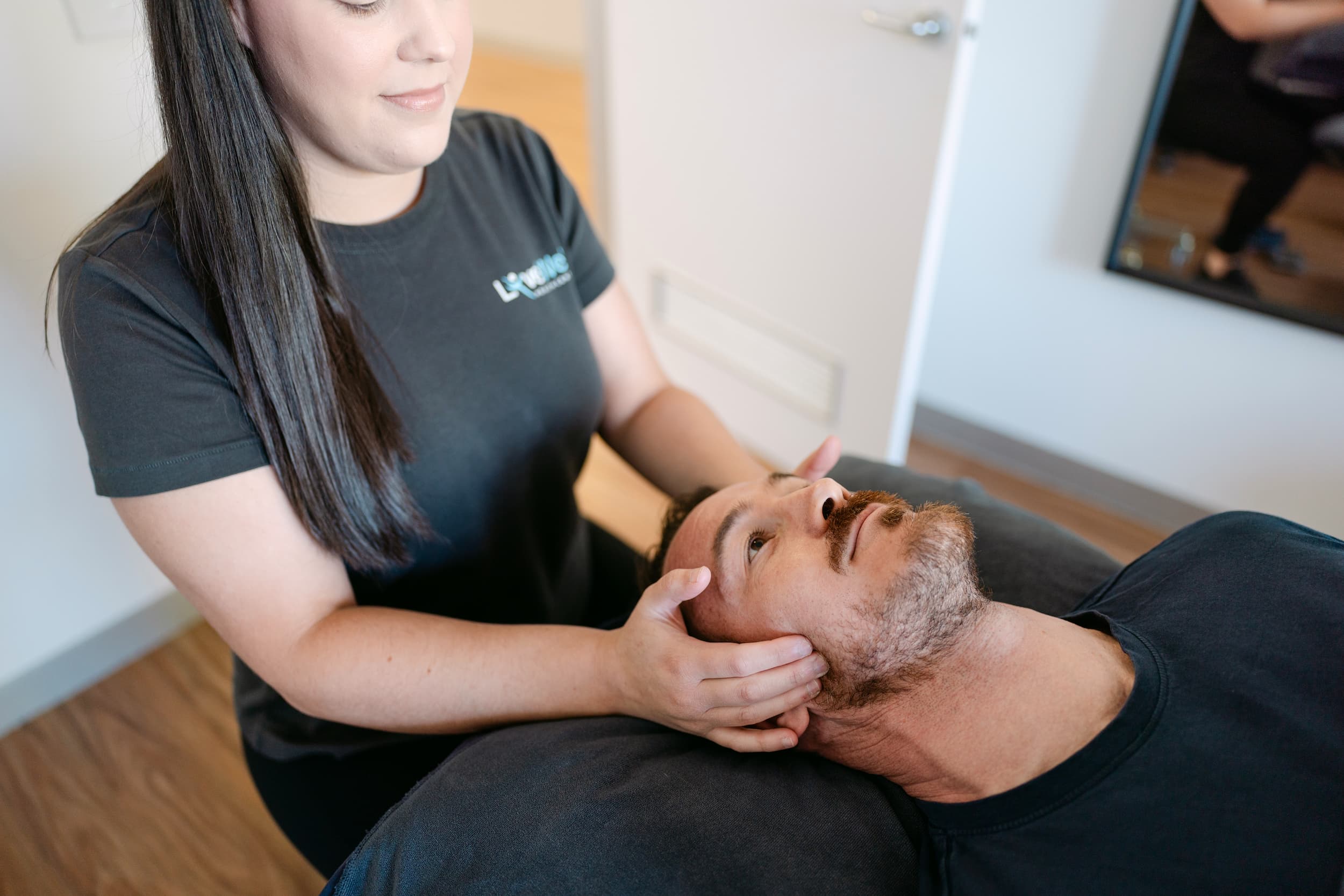
TMJ Dysfunction (Jaw Pain)
Osteopathic Management for TMJ Dysfunction — Melbourne & Caroline Springs
TMJ dysfunction refers to problems affecting the jaw joint and surrounding muscles, which can cause pain, clicking, stiffness, or difficulty moving the jaw.
At Live Well Health Centre, osteopaths help assess and manage TMJ dysfunction by evaluating not only the jaw joint, but also related structures such as the neck, posture, muscles, and lifestyle factors that may influence jaw function.
Our approach focuses on improving movement, reducing mechanical strain, and supporting coordinated function across the head, neck, and jaw.
What is TMJ dysfunction?
The temporomandibular joint (TMJ) connects the lower jaw (mandible) to the skull and allows movements needed for speaking, chewing, and yawning.
TMJ dysfunction describes problems affecting:
- the joint itself
- surrounding muscles
- movement coordination
- load placed on the jaw
Symptoms often arise when the joint or muscles are overloaded, irritated, or not moving efficiently.
TMJ problems may occur alone or alongside neck pain, headaches, or muscle tension.
Common symptoms
TMJ dysfunction may involve:
- jaw pain or tenderness
- clicking, popping, or grinding sounds
- difficulty opening or closing the mouth
- stiffness or reduced jaw movement
- facial muscle tension
- headaches around the temples
- ear discomfort without infection
- jaw fatigue when chewing
Some people may also experience neck pain or upper shoulder tension.
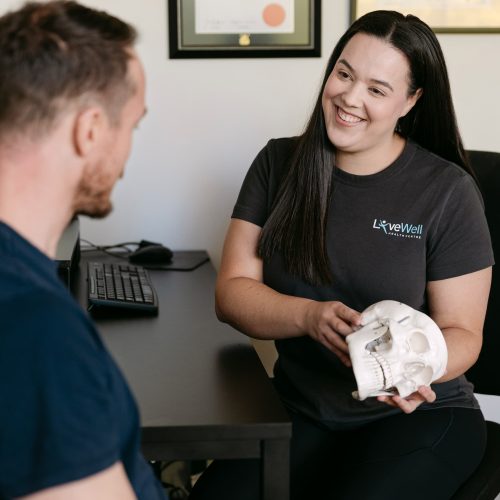
What causes TMJ dysfunction?
TMJ dysfunction is often influenced by multiple factors.
Common contributors include:
- jaw clenching or teeth grinding
- muscle tension
- stress-related muscle activity
- joint overload or irritation
- altered jaw movement patterns
- neck or upper cervical dysfunction
- posture-related strain
- previous jaw injury
The jaw works closely with the neck and surrounding muscles, so problems in one area may influence the other.
Who is most likely to experience TMJ dysfunction?
TMJ dysfunction can affect people of all ages.
It is commonly seen in:
- individuals who clench or grind their teeth
- people experiencing high stress levels
- those with neck pain or posture-related strain
- individuals with headaches
- people who have had jaw trauma or dental procedures
How is TMJ dysfunction assessed?
Osteopathic assessment typically includes:
- detailed history of symptoms and triggers
- jaw movement assessment
- muscle examination of jaw, neck, and shoulders
- cervical spine and posture evaluation
- functional movement assessment
Because TMJ disorders may involve dental or medical factors, referral to a dentist, GP, or specialist may be recommended where appropriate.
Collaborative care is often an important part of TMJ management.
How osteopathy may help manage TMJ dysfunction
Osteopaths help manage TMJ dysfunction by addressing mechanical and functional factors influencing jaw movement and load.
Management may involve:
- improving jaw mobility
- reducing muscle tension
- supporting coordinated movement
- addressing neck and posture influences
- providing education and self-management strategies
Care is individualised and often considers the jaw as part of a broader musculoskeletal system rather than an isolated joint.
Techniques that may be used
Depending on assessment findings, management may include:
- soft tissue techniques for jaw and neck muscles
- joint mobilisation of the jaw and upper cervical spine
- movement retraining
- posture and muscle control strategies
- rehabilitation exercises
- internal jaw techniques (performed only with informed consent when clinically appropriate)
Technique selection depends on clinical reasoning and patient comfort.
Collaborative care
Some TMJ conditions benefit from multidisciplinary management.
We commonly collaborate with:
- dentists (e.g. splints or bite management)
- medical practitioners (e.g. medication or injections if indicated)
- other allied health professionals
Referral is recommended when appropriate to support best outcomes.
Evidence and research
Research suggests TMJ disorders often involve both musculoskeletal and behavioural factors.
Evidence supports conservative management approaches including:
- manual therapy
- exercise and movement therapy
- education and self-management strategies
- multidisciplinary care when needed
These approaches are widely recommended as first-line management.
Key guideline and research sources
American Academy of Orofacial Pain — TMJ Disorder Guidelines
Support conservative, reversible management approaches as initial care.
Systematic reviews of manual therapy for temporomandibular disorders
Report potential improvements in pain and function with multimodal care.
Clinical consensus recommendations
Support education, exercise, and behavioural management in TMJ disorders.
Clinical interpretation
Management that addresses movement, muscle function, and contributing lifestyle factors is widely recommended for TMJ disorders.
What to expect from management
Management depends on:
- underlying contributing factors
- symptom duration
- muscle involvement
- behavioural factors (e.g. clenching)
Some people experience gradual improvement as mechanical and behavioural contributors are addressed.
Active participation in exercises and self-management strategies is often important.
Self-management and lifestyle support
Education is a key component of TMJ management.
Your osteopath may guide:
- jaw relaxation strategies
- clenching awareness
- posture and neck positioning
- movement control exercises
- activity modification
When to seek medical or dental review
Assessment by a dentist or medical practitioner may be recommended if symptoms involve:
- jaw locking
- severe bite change
- trauma
- persistent pain not responding to care
- significant joint degeneration
Frequently asked questions
Can stress affect the jaw?
Stress can increase muscle tension and clenching, which may influence symptoms.
Is jaw clicking serious?
Clicking can occur without pain, but assessment is recommended if symptoms develop.
Do I need a dental splint?
Some individuals benefit from dental appliances, depending on assessment findings.
Can neck problems affect the jaw?
Yes. The jaw and upper cervical spine function closely together.
Related conditions
- Headaches
- Neck pain
- Upper cervical dysfunction
- Muscle tension
Not sure if your jaw symptoms are TMJ dysfunction?
If you are unsure what is causing your symptoms, an osteopathic assessment can help identify contributing factors and guide appropriate management.
Book an appointment to discuss your symptoms.
Specialised TMJ & Headache Support
At Live Well Health Centre, Samantha Volarich (Osteopath) has completed postgraduate training in the Watson Headache® Approach and has a special interest in the relationship between jaw function, neck movement, and headaches.
If headaches or upper neck symptoms are part of your presentation, targeted assessment may be helpful. Please let our reception team know when booking.