
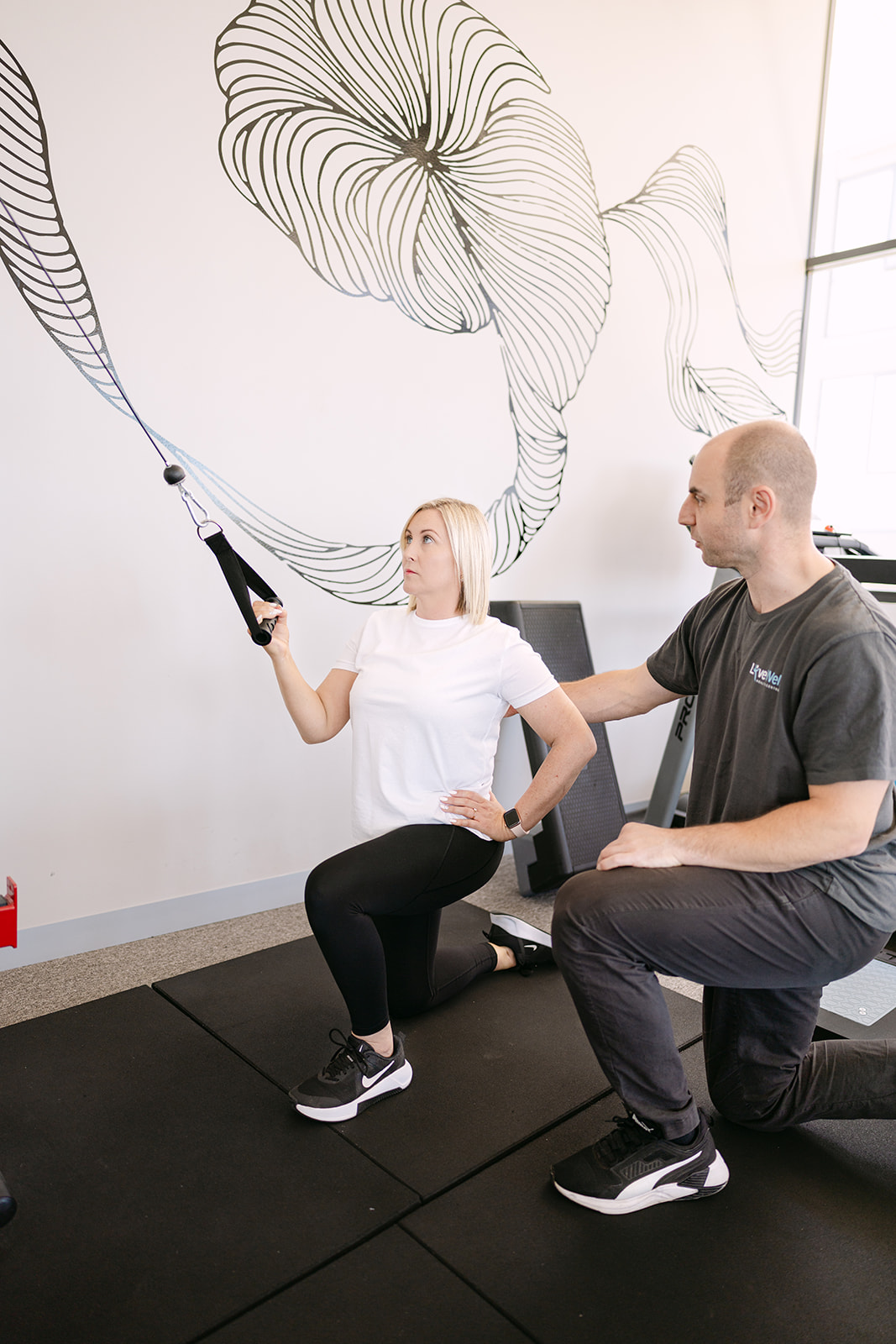
Exercise Prescription & Rehabilitation
Personalised Movement Therapy for Long-Term Recovery — Melbourne & Caroline Springs
At Live Well Health Centre, exercise prescription is a core part of treatment — not an optional extra.
Hands-on therapy can reduce pain and improve movement, but lasting recovery depends on how your body functions day-to-day.
That is why we combine manual therapy with individualised rehabilitation programs designed specifically for your condition, goals, and stage of recovery.
What is exercise prescription? (plain English)
Exercise prescription is a structured, personalised program of movements designed to:
- Improve strength and control
- Restore normal movement patterns
- Support tissue healing
- Reduce pain recurrence
- Improve long-term function
Unlike general fitness programs, rehabilitation exercises are clinically selected based on assessment findings.
They are prescribed with specific:
- Exercises
- Technique instructions
- Frequency
- Progression
- Recovery goals
How exercise rehabilitation works (simple physiology)
- Injury and pain often change how the body moves.
- Muscles may weaken, tighten, or compensate.
- Joints may move differently.
- The nervous system may become more sensitive to movement.
Targeted rehabilitation helps by:
- Restoring normal muscle activation
- Improving joint stability and control
- Improving tissue load tolerance
- Retraining movement patterns
- Reducing pain sensitivity over time
Movement is one of the most effective ways to improve tissue capacity and long-term function.
Who exercise rehabilitation helps
Exercise prescription is used for many musculoskeletal conditions, including:
- Back and neck pain
- Joint injuries
- Tendon injuries
- Postural strain
- Sports injuries
- Workplace injuries
- Post-surgical recovery
- Recurrent or persistent pain
- Reduced mobility or strength
It is essential for anyone wanting long-term recovery rather than temporary relief.
What to expect during rehabilitation treatment
Your osteopath will:
- Assess strength, movement control, and function
- Identify areas of weakness or compensation
- Design a personalised exercise program
- Teach correct technique
- Monitor progress and adjust the program
Programs are progressed gradually to match your recovery.
Interactive exercise programs (Rehab My Patient)
At Live Well, we use Rehab My Patient, a clinical exercise software platform.
This allows us to provide:
- Personalised exercise programs
- Video demonstrations
- Clear written instructions
- Progress tracking
- Easy access from your phone or computer
This makes rehabilitation easier to follow, more structured, and more effective.
Clinical rehabilitation vs generic gym programs
This is an important difference.
Generic exercise programs
- Based on general fitness
- Same exercises for many people
- Not injury-specific
- Limited progression planning
Clinical exercise prescription
- Based on medical assessment
- Targets specific tissues and movement patterns
- Adjusted to injury stage
- Progressed safely
- Integrated with treatment goals
Clinical rehabilitation is treatment — not just exercise.
Integration with other treatments
Exercise prescription is often combined with:
- Osteopathic manual therapy
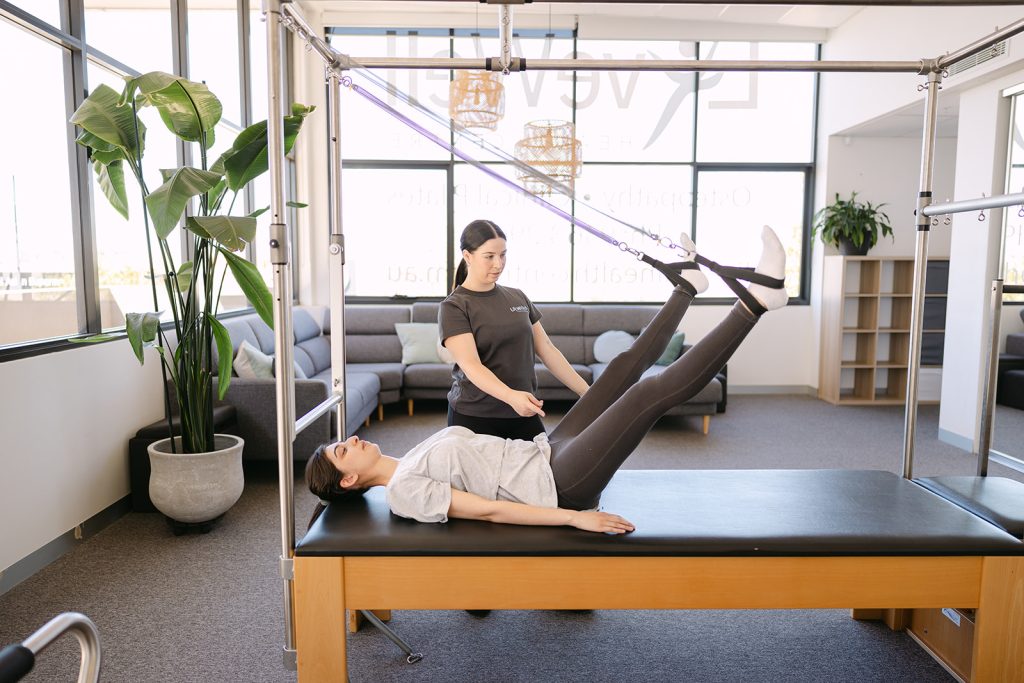
- Clinical Pilates
- Shockwave therapy
- Dry needling
- Movement retraining
This integrated approach improves recovery speed and long-term outcomes.
Patient accountability and progression
Recovery requires consistency.
Your osteopath will:
- Monitor your progress
- Progress exercises safely
- Adjust based on response
- Guide return to activity
Structured progression helps ensure recovery continues — not plateaus.
Evidence and research
Strong clinical evidence supports exercise therapy for many musculoskeletal conditions.
Exercise is widely recommended as first-line management for:
- chronic low back pain
- tendon disorders
- joint instability
- injury rehabilitation
Clinical guidelines consistently recommend exercise-based rehabilitation combined with education and manual therapy.
Key research and guideline sources
World Health Organization Guidelines for Chronic Low Back Pain (2023)
Recommend exercise therapy as core treatment.
American College of Physicians Clinical Practice Guidelines
Recommend exercise and movement-based therapy for musculoskeletal pain.
National Institute for Health and Care Excellence (NICE) Guidelines
Support structured rehabilitation for persistent musculoskeletal conditions.
Systematic reviews across sports medicine and rehabilitation research consistently show:
- Improved function
- Reduced recurrence risk
- Improved long-term outcomes
when exercise is included in treatment.
Safety and suitability
Exercise programs are prescribed based on:
- Injury type
- Healing stage
- Strength level
- Medical history
- Functional goals
Programs are progressed gradually to minimise risk.
Exercises are always adapted to individual tolerance.
Frequently asked questions
Do I need to go to a gym?
No. Many programs can be completed at home.
How often do I need to do exercises?
This depends on your condition and goals. Your osteopath will advise.
Will exercise make my pain worse?
Some discomfort can occur when tissues are rebuilding capacity. Programs are designed to be safe and progressive.
How long before I see results?
Many people notice improvement within weeks, depending on consistency.
Is rehabilitation necessary if I feel better?
Yes. Reduced pain does not always mean full recovery. Rehabilitation reduces recurrence risk.
Why we use exercise rehabilitation at Live Well
We prioritise rehabilitation because it:
- Improves long-term outcomes
- Reduces reinjury risk
- Restores function
- Builds resilience
- Supports independence
Hands-on treatment helps symptoms.
Exercise helps lasting recovery.
Particularly important for funded treatment programs
Exercise rehabilitation is central to:
- WorkCover recovery planning
- TAC injury management
- Return-to-work programs
- Long-term functional restoration
Exercise rehabilitation is central to:
Related treatments
- Soft Tissue Therapy
- Clinical Pilates
- Shockwave Therapy
- Dry Needling
- Joint Mobilisation
- Movement Retraining