
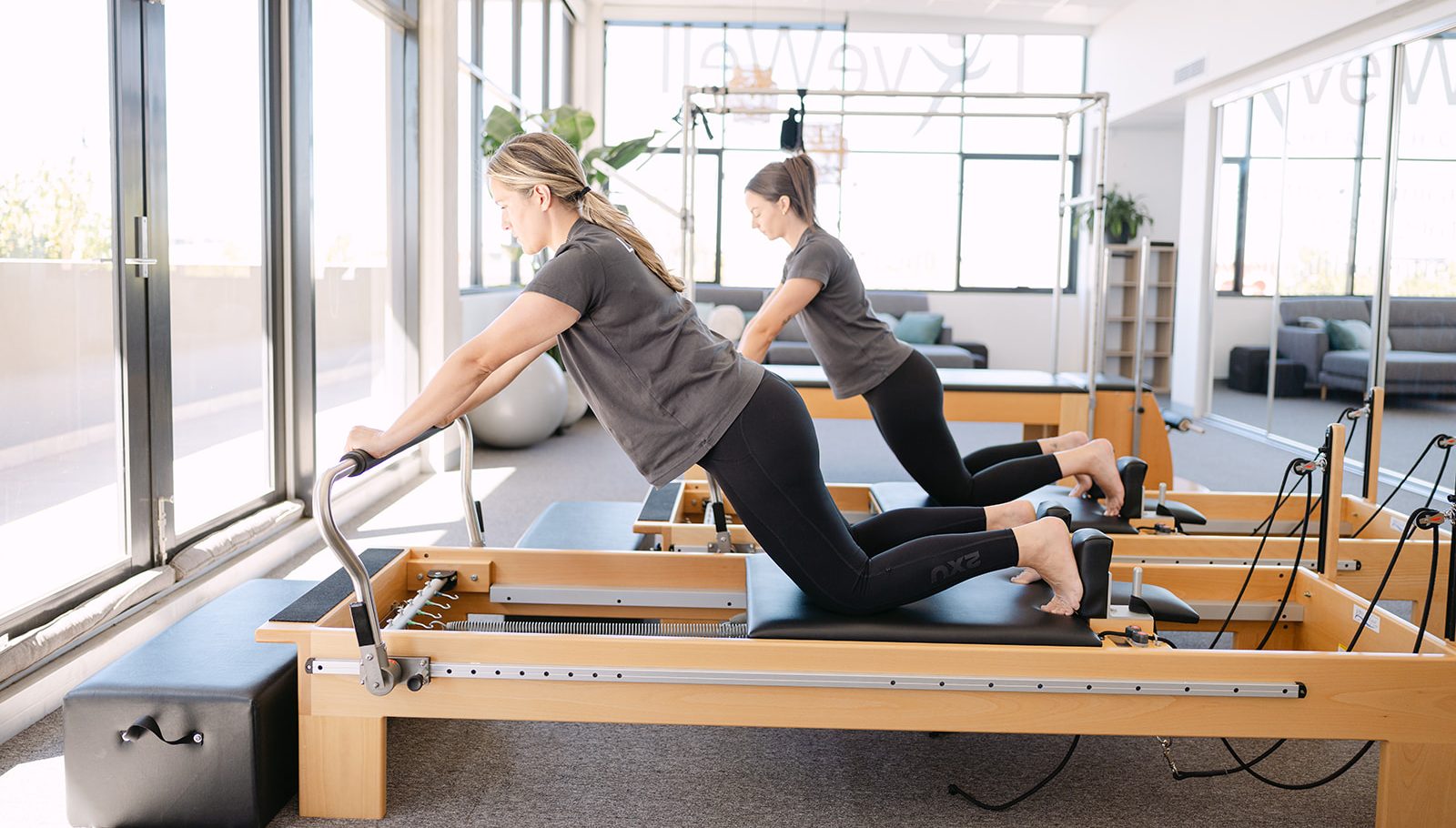
Clinical Pilates in Osteopathy
Targeted Movement Rehabilitation for Strength, Control & Recovery — Melbourne & Caroline Springs
Clinical Pilates is a structured, rehabilitation-based movement approach used to improve strength, control, posture, and functional movement.
At Live Well Health Centre, Clinical Pilates is used as part of an osteopathic treatment plan to support recovery from injury and improve long-term physical function.
Our practitioners are trained through Polestar Pilates, an internationally recognised rehabilitation-focused education provider, and we use Pilates Equip equipment, proudly designed and manufactured in Australia for clinical use across a wide range of populations — including people recovering from injury or living with mobility limitations.
What is it? (plain English)
Clinical Pilates is a personalised exercise program designed to help your body move better and function more efficiently.
Unlike general Pilates classes, Clinical Pilates is:
- Tailored to your injury or condition
- Based on clinical assessment
- Supervised by trained healthcare practitioners
- Progressed safely over time
Exercises are performed on specialised equipment or mats to improve strength, control, stability, and movement quality.
How it works (simple physiology)
Injury and pain often change how muscles and joints work together.
Some muscles may weaken, others overwork, and movement patterns can become inefficient or protective.
Clinical Pilates helps by:
- Improving muscle activation and coordination
- Strengthening stabilising muscles
- Improving joint control and alignment
- Increasing load tolerance of tissues
- Retraining efficient movement patterns
- Reducing nervous system sensitivity to movement
This improves how the body handles everyday physical demands.
Who it helps / conditions treated
Clinical Pilates is widely used for rehabilitation and long-term musculoskeletal health.
It may help people with:
- Back or neck pain
- Postural problems
- Joint instability
- Sports injuries
- Tendon injuries
- Pregnancy or post-natal recovery
- Chronic or recurrent pain
- Reduced mobility or strength
- Post-surgical rehabilitation
It is especially beneficial for people who need structured, guided exercise rather than general fitness training.
What to expect in treatment
Your Clinical Pilates program begins with assessment.
Your osteopath or rehabilitation practitioner will:
- Assess movement, strength, and control
- Identify dysfunction or weakness
- Design an individualised program
- Guide you through exercises
- Progress your program as you improve
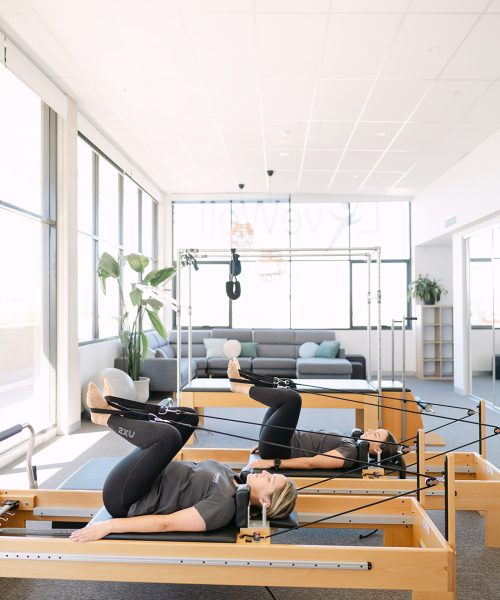
Sessions may use specialised equipment including reformers and rehabilitation apparatus designed for safe, controlled movement.
Programs are adjusted continuously based on your progress.
Equipment we use — Pilates Equip
We use Pilates Equip equipment, designed and manufactured in Australia for clinical rehabilitation.
This equipment is:
- Highly adjustable
- Supportive for injured individuals
- Suitable for reduced mobility
- Adaptable to different strength levels
This allows safe, precise exercise prescription for a wide range of patients.
Learn more about Pilates Equip: https://pilatesequip.com/
Practitioner training — Polestar Pilates
Our team is trained primarily through Polestar Pilates, a globally recognised rehabilitation-focused training system.
Polestar emphasises:
- Movement science
- Clinical reasoning
- Rehabilitation principles
- Functional integration
This ensures exercise programs are based on clinical need — not generic fitness routines.
Learn more: https://www.polestarpilates.com
Evidence & research
Exercise-based rehabilitation is one of the most strongly supported treatments for musculoskeletal pain and functional recovery.
Clinical Pilates is a form of structured therapeutic exercise and has been studied in multiple populations.
Research suggests Pilates-based rehabilitation may:
- Reduce chronic low back pain
- Improve function and disability scores
- Improve muscle endurance and control
- Improve posture and movement efficiency
Key research examples
Miyamoto et al., 2013 — Randomised Controlled Trial
Pilates improved pain and disability in chronic low back pain compared with minimal intervention.
Clinical Rehabilitation.
Yamato et al., 2015 — Systematic Review
Pilates reduces pain and disability in people with chronic low back pain.
PLOS One.
Wells et al., 2014 — Systematic Review
Pilates improves flexibility, balance, and muscular endurance across clinical populations.
Musculoskeletal Care.
Clinical interpretation
Pilates-based rehabilitation is most effective when:
- Individualised
- Progressed gradually
- Supervised appropriately
This aligns with clinical Pilates practice in osteopathy.
Safety and suitability
Clinical Pilates is considered very safe when supervised by trained practitioners.
Programs are modified based on:
- Injury stage
- Strength and mobility
- Medical history
- Tolerance to exercise
Exercises are progressed gradually to minimise risk.
Frequently asked questions
Is Clinical Pilates the same as a gym class?
No. It is individually prescribed rehabilitation based on clinical assessment.
Do I need to be fit to start?
No. Programs are adapted to your ability.
Is it suitable if I am injured?
Yes. It is specifically designed for rehabilitation and recovery.
How often should I attend?
Frequency depends on your condition and goals.
Is it covered by private health?
If delivered as part of osteopathic treatment, it may be covered depending on your policy.
Why we use Clinical Pilates at Live Well
We use Clinical Pilates because it:
- Supports long-term recovery
- Improves movement control
- Reduces reinjury risk
- Builds strength safely
- Integrates with osteopathic treatment
It helps translate treatment improvements into lasting functional change.
Integration with rehabilitation (our point of difference)
Clinical Pilates is integrated with:
- Osteopathic manual therapy
- Exercise prescription programs
- Shockwave therapy when appropriate
- Movement retraining
This comprehensive approach supports full recovery — not just symptom relief.
Related treatments
Pilates Timetable
| Monday | Tuesday | Wednesday | Thursday | Friday | Saturday |
|---|---|---|---|---|---|
| 8:00 AM | 8:00 AM | 8:00 AM | |||
| 8:45 AM | 8:45 AM | 8:45 AM | 8:45 AM | 8:45 AM | 8:45 AM |
| 9:30 AM | 9:30 AM | 9:30 AM | 9:30 AM | 9:30 AM | 9:30 AM |
| 10:15 AM | 10:15 AM | 10:15 AM | 10:15 AM | 10:15 AM | 10:15 AM |
| 4:00 PM | |||||
| 4:45 PM | 4:45 PM | 4:45 PM | 4:45 PM | ||
| 5:30 PM | 5:30 PM | 5:30 PM | 5:30 PM | ||
| 6:15 PM | 6:15 PM | 6:15 PM | 6:15 PM | ||
| 7:00 PM | 7:00 PM | 7:00 PM | 7:00 PM |